
Wenn du eine Englisch-Klausur schreibst und dabei Texte analysieren oder... Zobrazit více
 Englisch3,595 zobrazení·Aktualizováno May 26, 2026·6 stránek
Top-Phrasen für das Englisch-Abitur
1 / 6
1
of 6
Nützliche Phrasen für den Einstieg
Der erste Eindruck zählt - und das gilt besonders für deine Einleitung in Englisch-Klausuren! Mit den richtigen Standardphrasen wirkst du sofort professioneller.
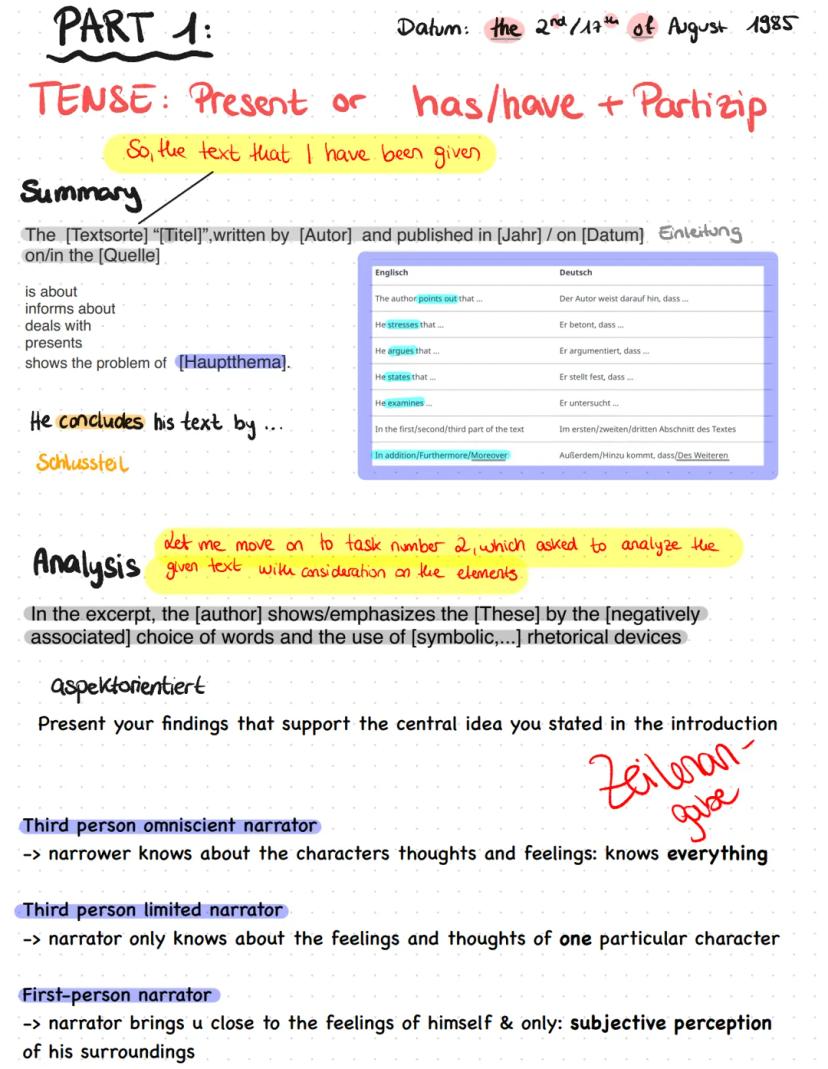
Für die Texteinleitung merkst du dir am besten diese Formel: "The [Textsorte] '[Titel]', written by [Autor] and published in [Jahr]/on [Datum] on/in the [Quelle]". Beim Datum verwendest du übrigens "the 2nd/17th of August 1985" und achtest darauf, dass du im Present Tense oder mit "has/have + Partizip" schreibst.
Tipp: Lerne diese Einleitungsformel auswendig - sie funktioniert bei fast jedem Text und spart dir wertvolle Zeit in der Klausur!
2
of 6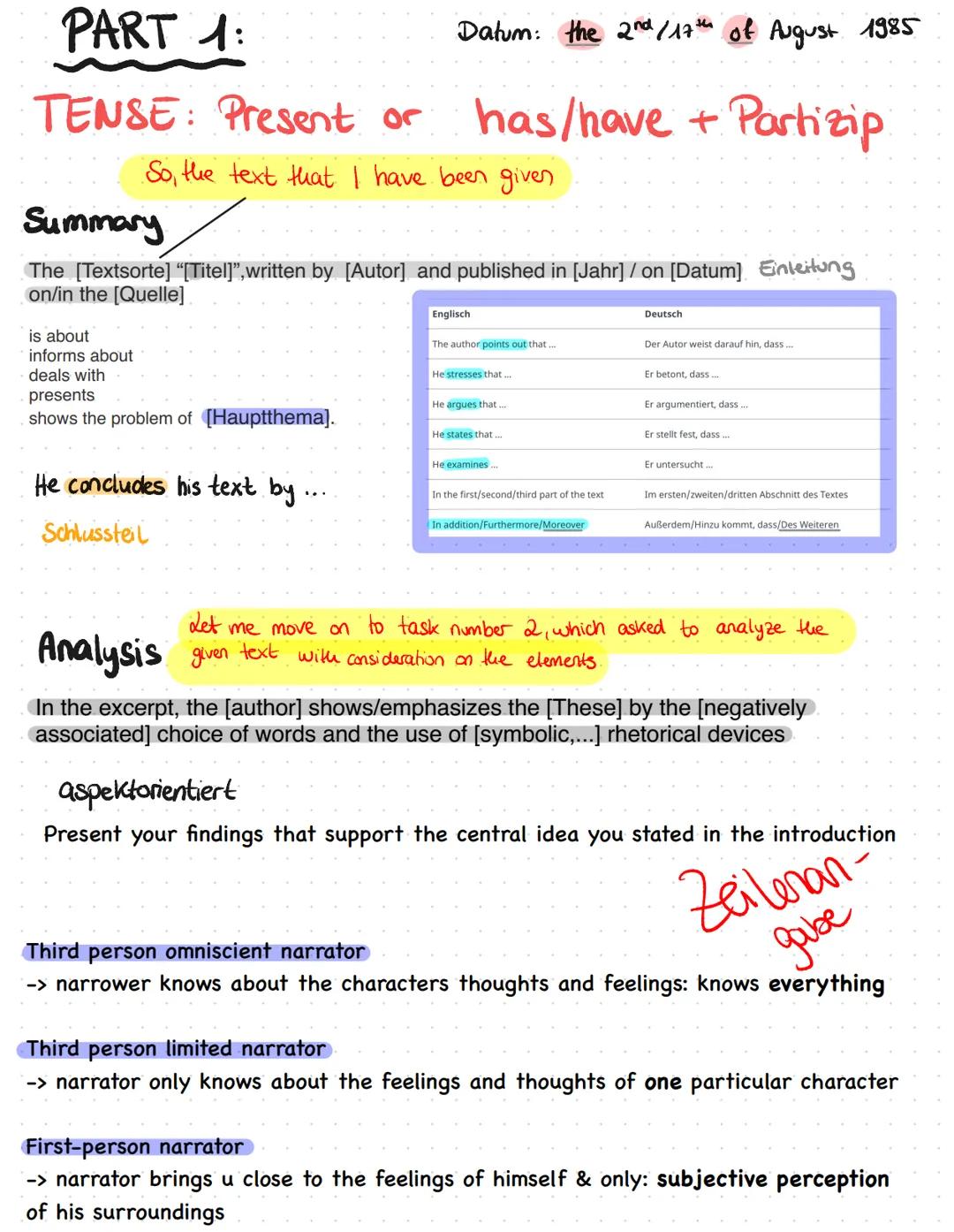
Analysephrasen und Erzählperspektiven
Für eine gute Textanalyse brauchst du Phrasen, die zeigen, was der Autor macht. "The author points out that..." (Der Autor weist darauf hin), "He stresses that..." (Er betont) oder "He argues that..." (Er argumentiert) sind deine Grundausstattung.
Bei der Erzählperspektive unterscheidest du drei wichtige Typen: Der Third person omniscient narrator weiß alles über alle Charaktere. Der Third person limited narrator kennt nur die Gedanken einer Person. Der First-person narrator erzählt subjektiv aus seiner eigenen Sicht.
Vergiss nicht die aspektorientierte Analyse: "In the excerpt, the author shows the [These] by the negatively associated choice of words and the use of rhetorical devices." So verbindest du Textinhalt mit sprachlichen Mitteln.
Merkhilfe: Omniscient = allwissend, Limited = begrenzt, First-person = ich-bezogen!
3
of 6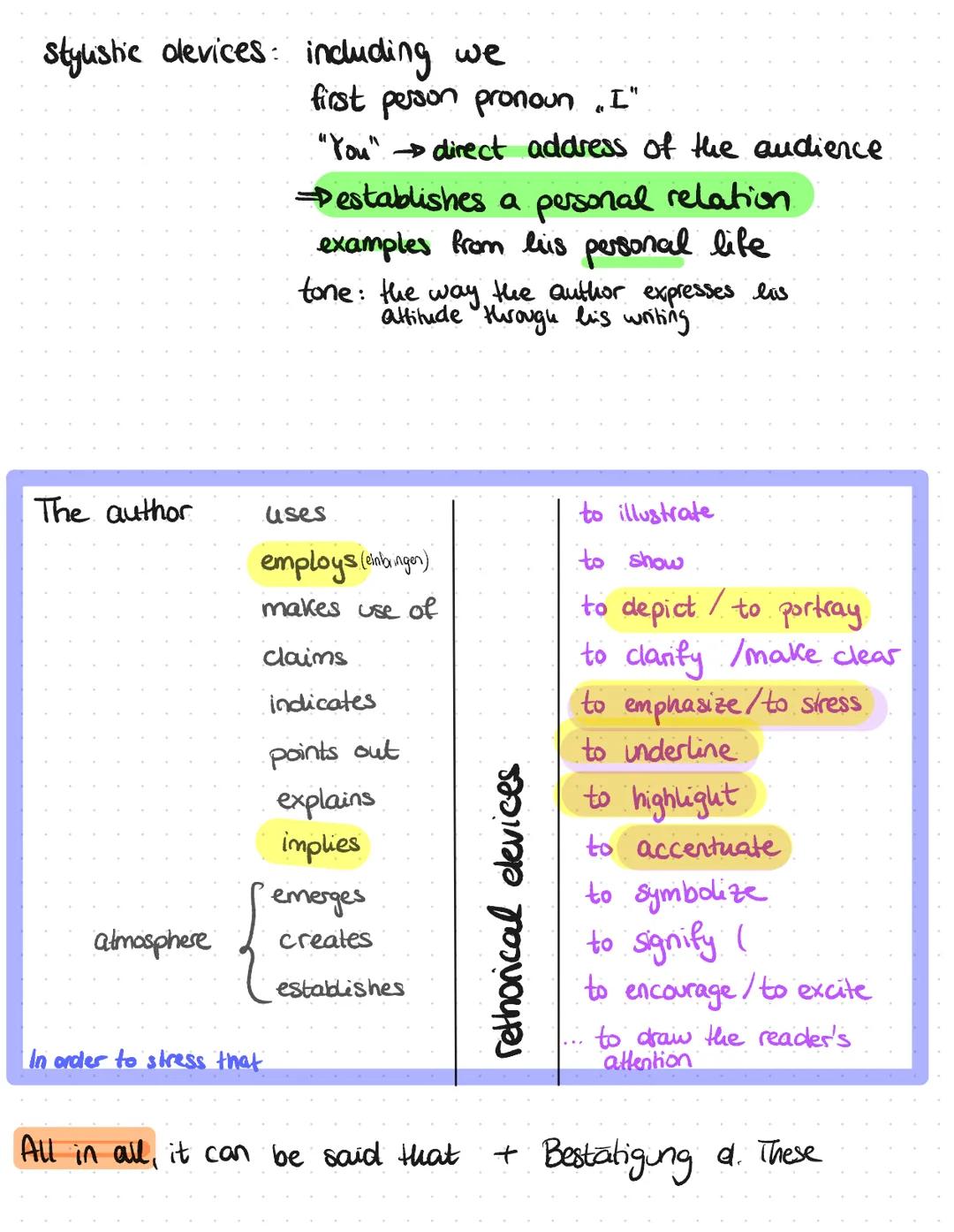
Stilmittel und Wirkung beschreiben
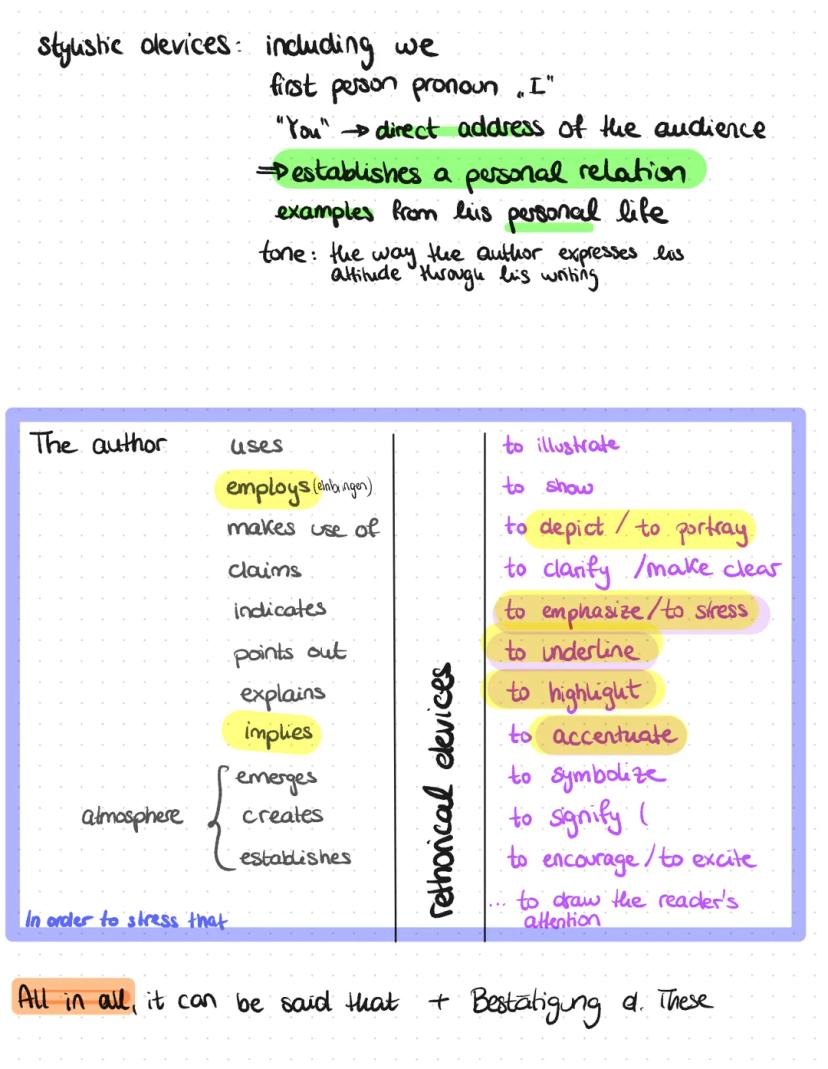
Stilmittel erkennen ist nur die halbe Miete - du musst auch ihre Wirkung erklären können! Der Autor "uses", "employs" oder "makes use of" verschiedene Techniken, um bestimmte Effekte zu erzielen.
Wichtige Wirkungsverben sind: "to emphasize/to stress" (betonen), "to highlight" (hervorheben), "to symbolize" (symbolisieren) und "to draw the reader's attention" (Aufmerksamkeit lenken). Diese Verben zeigen, warum der Autor bestimmte Mittel einsetzt.
Persönliche Elemente wie "I", "you" oder "we" schaffen eine direkte Verbindung zum Leser. Der Tone (Tonfall) verrät die Haltung des Autors zum Thema.
Profi-Tipp: Verknüpfe Stilmittel immer mit ihrer Wirkung - nie nur auflisten!
4
of 6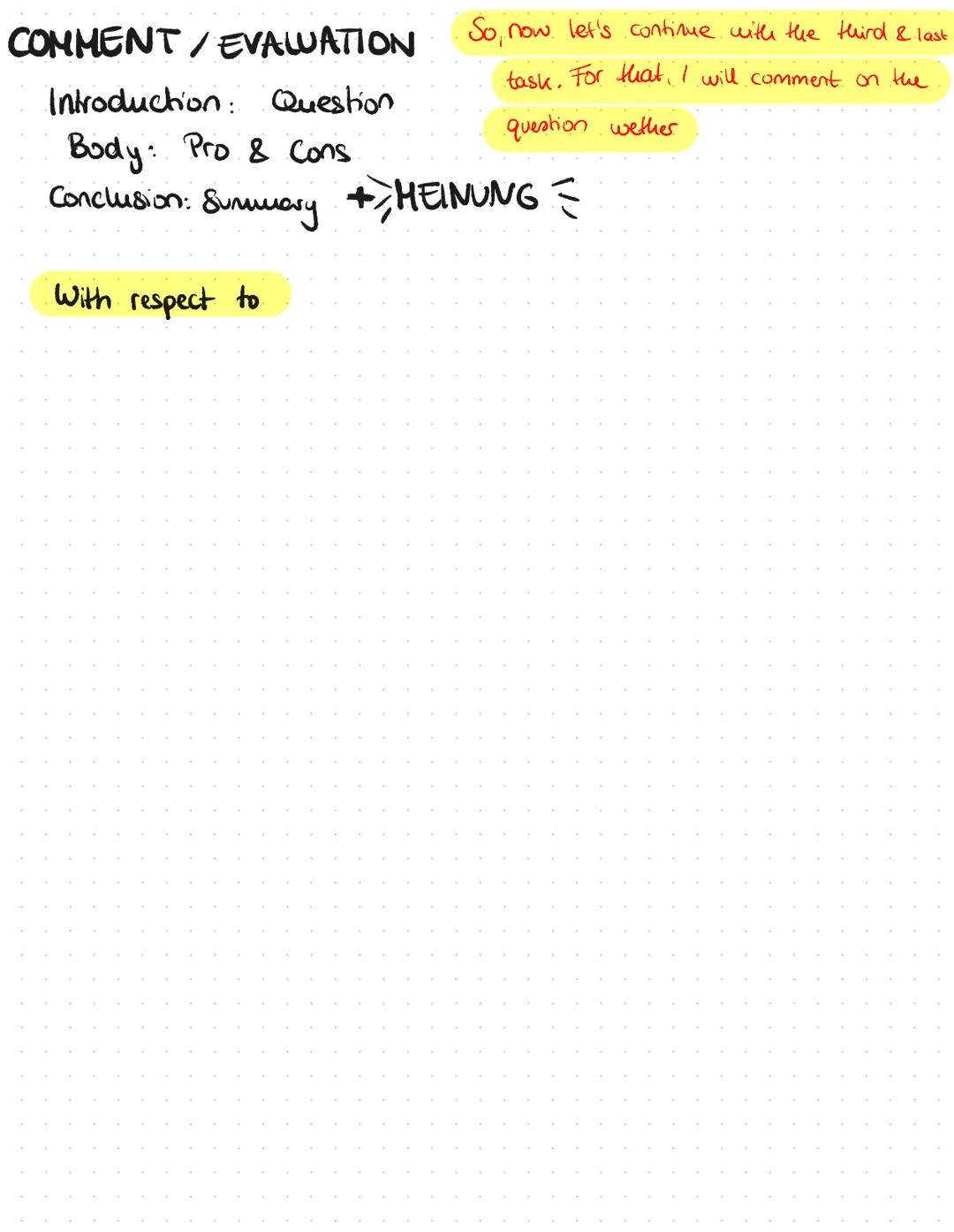
Comment und Evaluation strukturieren
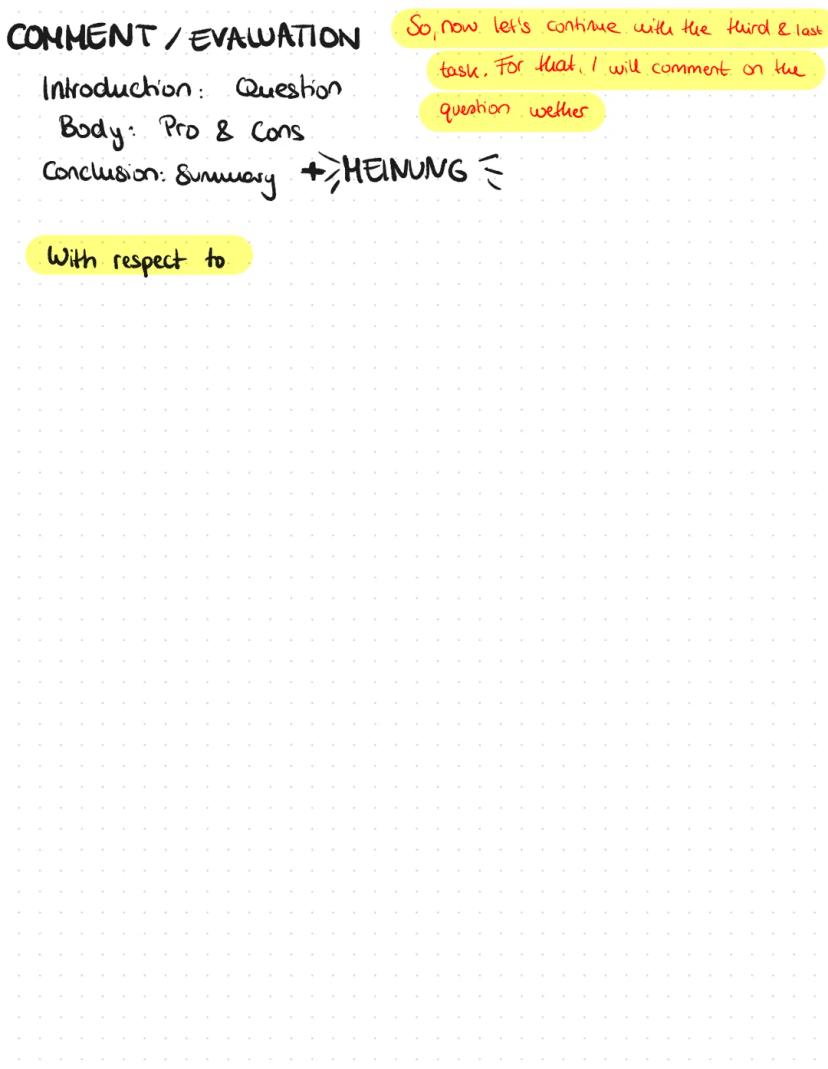
Beim Comment zeigst du deine eigene Meinung zu einer Frage. Die Struktur ist klar: Introduction mit der Fragestellung, Body mit Pro- und Contra-Argumenten, Conclusion mit deiner persönlichen Meinung.
"With respect to" (In Bezug auf) ist ein eleganter Einstieg für deine Stellungnahme. Du bewertest dabei nicht nur den Text, sondern entwickelst eine eigene argumentative Position.
Der Schlüssel liegt darin, beide Seiten zu beleuchten, bevor du dich festlegst. So wirkst du reflektiert und durchdacht.
Wichtig: Deine Meinung gehört in den Schluss - vorher bleibst du neutral und wägst ab!
5
of 6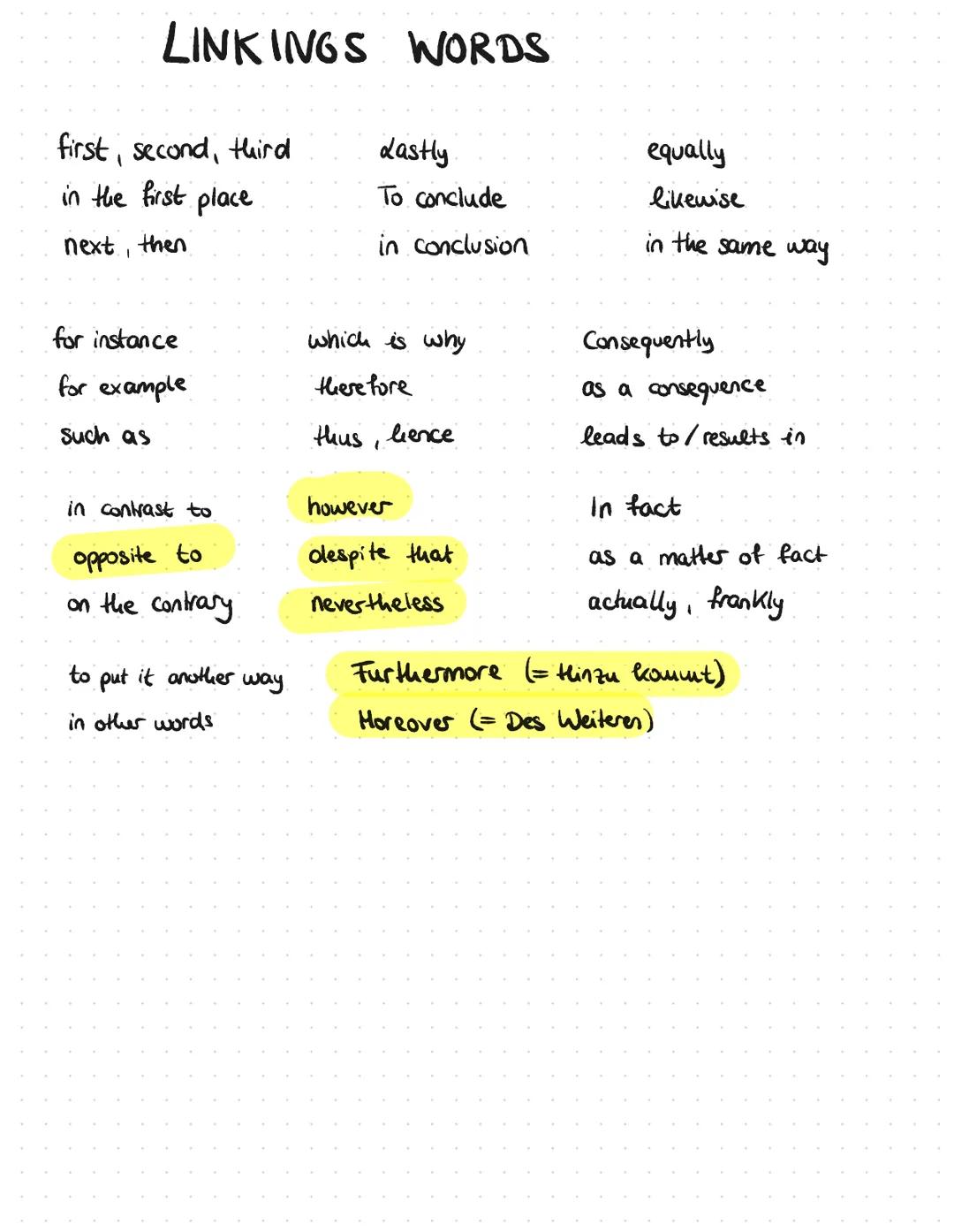
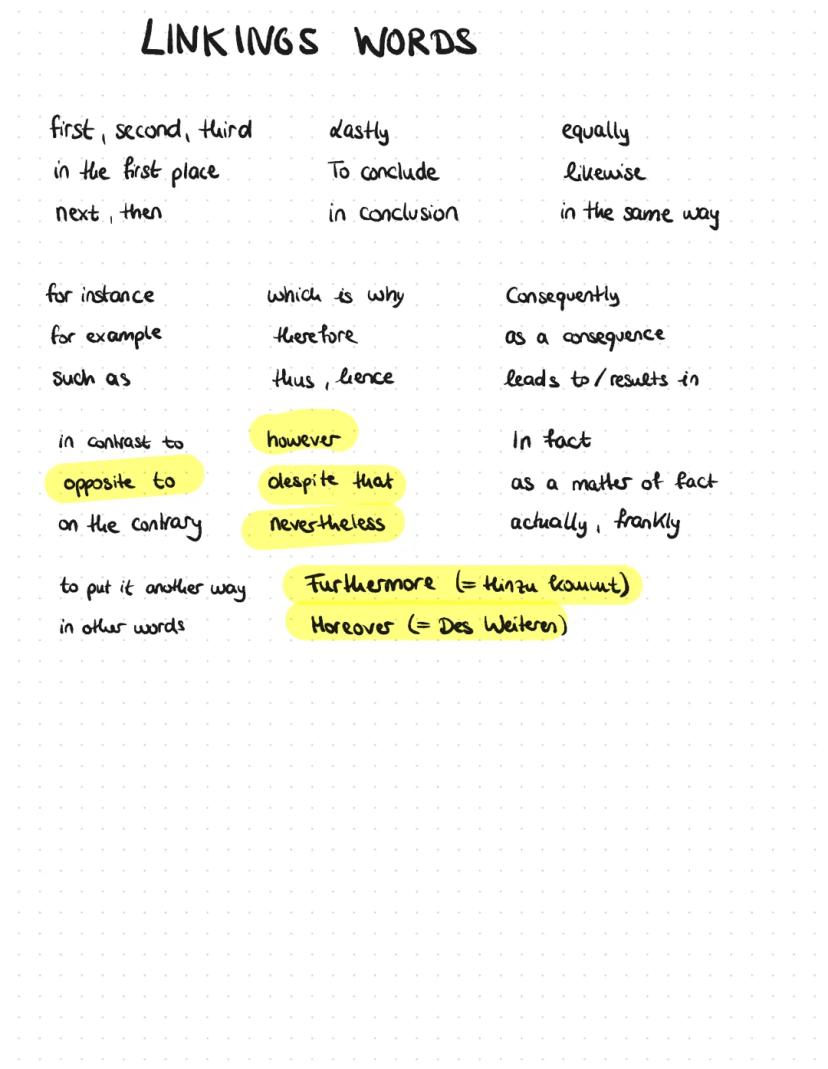
Linking Words für bessere Struktur
Linking Words sind das Geheimnis für flüssige Texte! Sie verbinden deine Gedanken logisch und machen deine Argumentation nachvollziehbar.
Für Aufzählungen verwendest du "first, second, third" oder "in the first place, next, then". Beispiele leitest du mit "for instance" oder "such as" ein. Gegensätze zeigst du mit "in contrast to", "however" oder "nevertheless".
Schlussfolgerungen markierst du mit "therefore", "thus" oder "consequently". Für Zusatzinformationen nutzt du "furthermore" oder "moreover". Am Ende fasst du mit "to conclude" oder "in conclusion" zusammen.
Übung macht den Meister: Verwende in jedem Absatz mindestens ein Linking Word!
6
of 6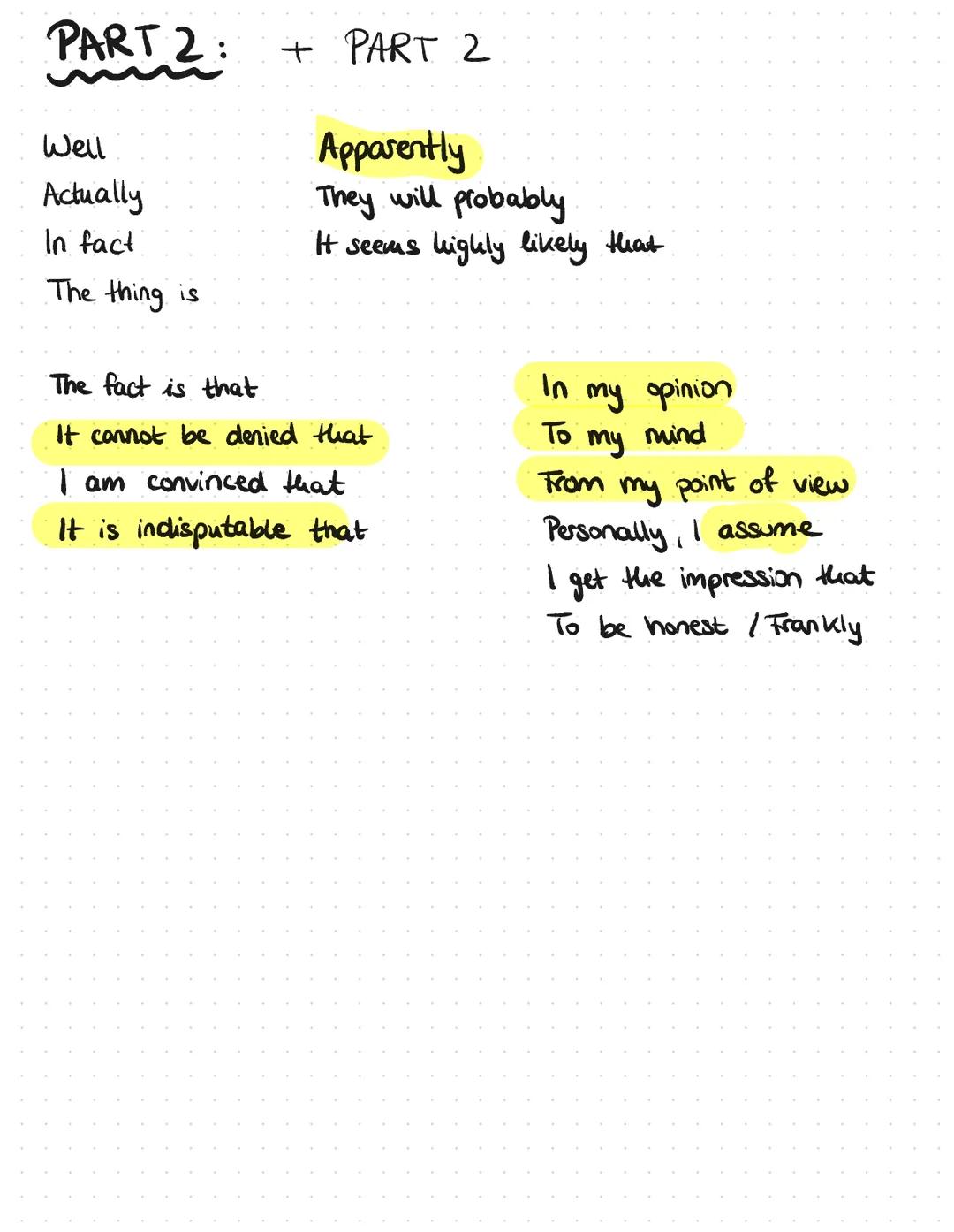
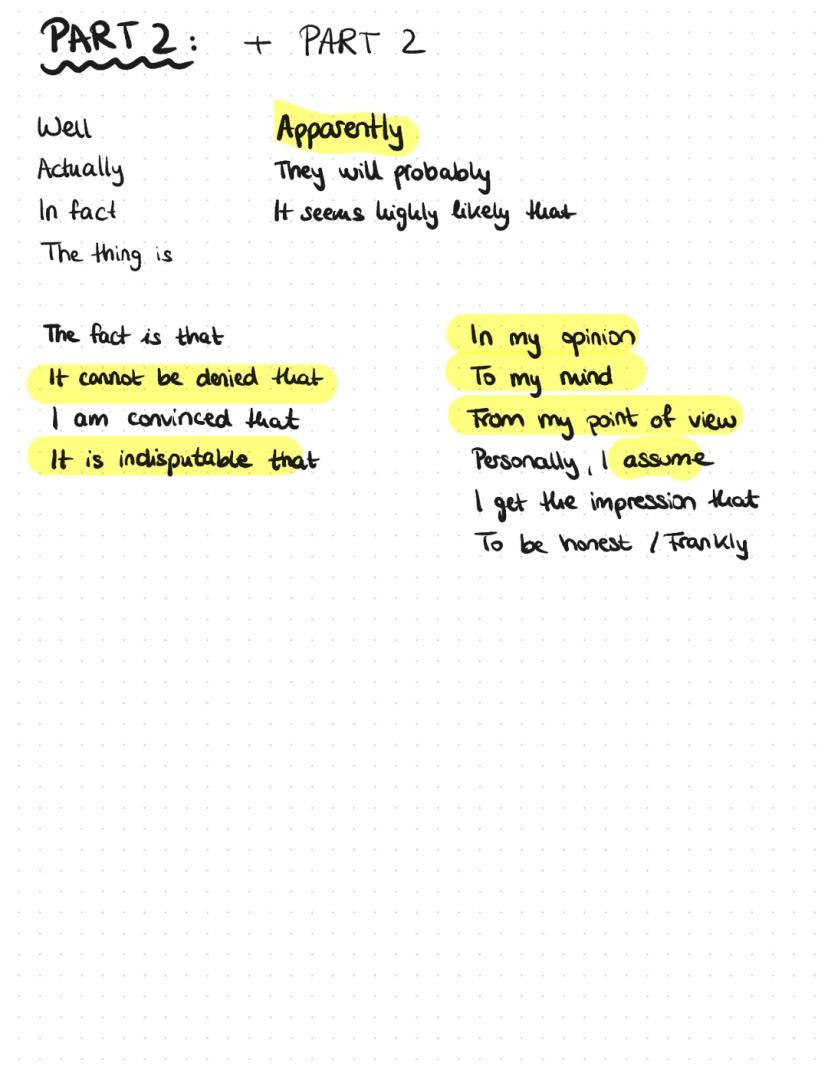
Meinungsäußerung und Wahrscheinlichkeit
Deine persönliche Meinung drückst du höflich aber bestimmt aus. "In my opinion", "from my point of view" oder "personally, I assume" zeigen, dass du eine durchdachte Position hast.
Für Wahrscheinlichkeiten und Vermutungen verwendest du "apparently", "it seems highly likely that" oder "they will probably". So wirkst du nicht zu absolut in deinen Aussagen.
Bekräftigungen wie "I am convinced that", "it cannot be denied that" oder "it is indisputable that" unterstützen starke Argumente. "To be honest" oder "frankly" verleihen deinen Aussagen Authentizität.
Balance finden: Sei selbstbewusst in deiner Meinung, aber respektiere andere Sichtweisen!
Mysleli jsme, že se nikdy nezeptáš...
Co je AI společník Knowunity?
Náš AI společník je speciálně vytvořen pro potřeby studentů. Na základě milionů obsahových materiálů, které máme na platformě, můžeme studentům poskytovat opravdu smysluplné a relevantní odpovědi. Ale nejde jen o odpovědi, společník je ještě více o provázení studentů jejich každodenními výzvami v učení, s personalizovanými studijními plány, kvízy nebo obsahovými materiály v chatu a 100% personalizací na základě dovedností a vývoje studentů.
Kde si můžu stáhnout aplikaci Knowunity?
Aplikaci si můžete stáhnout z obchodu Google Play a Apple App Store.
Jak můžu dostat svou platbu? Kolik si můžu vydělat?
Ano, máte bezplatný přístup k obsahu v aplikaci a k našemu společníkovi s umělou inteligencí. Chcete-li odemknout určité funkce aplikace, můžete si zakoupit aplikaci Knowunity Pro.
Podobný obsah
Nejpopulárnější poznámky: linking words
9Nejpopulárnější poznámky z Englisch
9Nejpopulárnější poznámky
9Nemůžeš najít, co hledáš? Prozkoumej další předměty.
Recenze od našich uživatelů. Mají vše super — a ty taky můžeš.
4.6/5App Store
4.7/5Google Play
Aplikace je velmi jednoduchá na používání a dobře navržená. Zatím jsem našel vše, co jsem hledal, a mohl jsem se z prezentací hodně naučit! Určitě použiju aplikaci na školní úkol! A samozřejmě taky hodně pomáhá jako inspirace.
Stefan Suživatel iOS
Tahle aplikace je fakt skvělá. Je tam tolik studijních poznámek a pomůcek [...]. Můj problémový předmět je například francouzština a aplikace nabízí tolik možností pomoci. Díky této aplikaci jsem si zlepšil francouzštinu. Doporučil bych ji každému.
Samantha Klichuživatelka Androidu
Páni, jsem opravdu ohromen. Zkusil jsem aplikaci jen proto, že jsem ji mnohokrát viděl v reklamách, a byl jsem naprosto ohromen. Tato aplikace je TA POMOC, kterou chceš do školy, a především nabízí spoustu věcí, jako jsou cvičení a přehledy faktů, které mi osobně VELMI pomohly.
Annauživatelka iOS
Englisch3,595 zobrazení·Aktualizováno May 26, 2026·6 stránekTop-Phrasen für das Englisch-Abitur
Wenn du eine Englisch-Klausur schreibst und dabei Texte analysieren oder kommentieren musst, brauchst du die richtigen sprachlichen Werkzeuge. Diese nützlichen Phrasen und Linking Words helfen dir dabei, deine Gedanken strukturiert und überzeugend zu formulieren.
1
of 6Registruj se, abys viděl obsah. Je to zdarma!
- Přístup ke všem dokumentům
- Zlepši své známky
- Připoj se k milionům studentů
Nützliche Phrasen für den Einstieg
Der erste Eindruck zählt - und das gilt besonders für deine Einleitung in Englisch-Klausuren! Mit den richtigen Standardphrasen wirkst du sofort professioneller.
Für die Texteinleitung merkst du dir am besten diese Formel: "The [Textsorte] '[Titel]', written by [Autor] and published in [Jahr]/on [Datum] on/in the [Quelle]". Beim Datum verwendest du übrigens "the 2nd/17th of August 1985" und achtest darauf, dass du im Present Tense oder mit "has/have + Partizip" schreibst.
Tipp: Lerne diese Einleitungsformel auswendig - sie funktioniert bei fast jedem Text und spart dir wertvolle Zeit in der Klausur!
2
of 6Registruj se, abys viděl obsah. Je to zdarma!
- Přístup ke všem dokumentům
- Zlepši své známky
- Připoj se k milionům studentů
Analysephrasen und Erzählperspektiven
Für eine gute Textanalyse brauchst du Phrasen, die zeigen, was der Autor macht. "The author points out that..." (Der Autor weist darauf hin), "He stresses that..." (Er betont) oder "He argues that..." (Er argumentiert) sind deine Grundausstattung.
Bei der Erzählperspektive unterscheidest du drei wichtige Typen: Der Third person omniscient narrator weiß alles über alle Charaktere. Der Third person limited narrator kennt nur die Gedanken einer Person. Der First-person narrator erzählt subjektiv aus seiner eigenen Sicht.
Vergiss nicht die aspektorientierte Analyse: "In the excerpt, the author shows the [These] by the negatively associated choice of words and the use of rhetorical devices." So verbindest du Textinhalt mit sprachlichen Mitteln.
Merkhilfe: Omniscient = allwissend, Limited = begrenzt, First-person = ich-bezogen!
3
of 6Registruj se, abys viděl obsah. Je to zdarma!
- Přístup ke všem dokumentům
- Zlepši své známky
- Připoj se k milionům studentů
Stilmittel und Wirkung beschreiben
Stilmittel erkennen ist nur die halbe Miete - du musst auch ihre Wirkung erklären können! Der Autor "uses", "employs" oder "makes use of" verschiedene Techniken, um bestimmte Effekte zu erzielen.
Wichtige Wirkungsverben sind: "to emphasize/to stress" (betonen), "to highlight" (hervorheben), "to symbolize" (symbolisieren) und "to draw the reader's attention" (Aufmerksamkeit lenken). Diese Verben zeigen, warum der Autor bestimmte Mittel einsetzt.
Persönliche Elemente wie "I", "you" oder "we" schaffen eine direkte Verbindung zum Leser. Der Tone (Tonfall) verrät die Haltung des Autors zum Thema.
Profi-Tipp: Verknüpfe Stilmittel immer mit ihrer Wirkung - nie nur auflisten!
4
of 6Registruj se, abys viděl obsah. Je to zdarma!
- Přístup ke všem dokumentům
- Zlepši své známky
- Připoj se k milionům studentů
Comment und Evaluation strukturieren
Beim Comment zeigst du deine eigene Meinung zu einer Frage. Die Struktur ist klar: Introduction mit der Fragestellung, Body mit Pro- und Contra-Argumenten, Conclusion mit deiner persönlichen Meinung.
"With respect to" (In Bezug auf) ist ein eleganter Einstieg für deine Stellungnahme. Du bewertest dabei nicht nur den Text, sondern entwickelst eine eigene argumentative Position.
Der Schlüssel liegt darin, beide Seiten zu beleuchten, bevor du dich festlegst. So wirkst du reflektiert und durchdacht.
Wichtig: Deine Meinung gehört in den Schluss - vorher bleibst du neutral und wägst ab!
5
of 6Registruj se, abys viděl obsah. Je to zdarma!
- Přístup ke všem dokumentům
- Zlepši své známky
- Připoj se k milionům studentů
Linking Words für bessere Struktur
Linking Words sind das Geheimnis für flüssige Texte! Sie verbinden deine Gedanken logisch und machen deine Argumentation nachvollziehbar.
Für Aufzählungen verwendest du "first, second, third" oder "in the first place, next, then". Beispiele leitest du mit "for instance" oder "such as" ein. Gegensätze zeigst du mit "in contrast to", "however" oder "nevertheless".
Schlussfolgerungen markierst du mit "therefore", "thus" oder "consequently". Für Zusatzinformationen nutzt du "furthermore" oder "moreover". Am Ende fasst du mit "to conclude" oder "in conclusion" zusammen.
Übung macht den Meister: Verwende in jedem Absatz mindestens ein Linking Word!
6
of 6Registruj se, abys viděl obsah. Je to zdarma!
- Přístup ke všem dokumentům
- Zlepši své známky
- Připoj se k milionům studentů
Meinungsäußerung und Wahrscheinlichkeit
Deine persönliche Meinung drückst du höflich aber bestimmt aus. "In my opinion", "from my point of view" oder "personally, I assume" zeigen, dass du eine durchdachte Position hast.
Für Wahrscheinlichkeiten und Vermutungen verwendest du "apparently", "it seems highly likely that" oder "they will probably". So wirkst du nicht zu absolut in deinen Aussagen.
Bekräftigungen wie "I am convinced that", "it cannot be denied that" oder "it is indisputable that" unterstützen starke Argumente. "To be honest" oder "frankly" verleihen deinen Aussagen Authentizität.
Balance finden: Sei selbstbewusst in deiner Meinung, aber respektiere andere Sichtweisen!
Mysleli jsme, že se nikdy nezeptáš...
Co je AI společník Knowunity?
Náš AI společník je speciálně vytvořen pro potřeby studentů. Na základě milionů obsahových materiálů, které máme na platformě, můžeme studentům poskytovat opravdu smysluplné a relevantní odpovědi. Ale nejde jen o odpovědi, společník je ještě více o provázení studentů jejich každodenními výzvami v učení, s personalizovanými studijními plány, kvízy nebo obsahovými materiály v chatu a 100% personalizací na základě dovedností a vývoje studentů.
Kde si můžu stáhnout aplikaci Knowunity?
Aplikaci si můžete stáhnout z obchodu Google Play a Apple App Store.
Jak můžu dostat svou platbu? Kolik si můžu vydělat?
Ano, máte bezplatný přístup k obsahu v aplikaci a k našemu společníkovi s umělou inteligencí. Chcete-li odemknout určité funkce aplikace, můžete si zakoupit aplikaci Knowunity Pro.
Podobný obsah
Nejpopulárnější poznámky: linking words
9Nejpopulárnější poznámky z Englisch
9Nejpopulárnější poznámky
9Nemůžeš najít, co hledáš? Prozkoumej další předměty.
Recenze od našich uživatelů. Mají vše super — a ty taky můžeš.
4.6/5App Store
4.7/5Google Play
Aplikace je velmi jednoduchá na používání a dobře navržená. Zatím jsem našel vše, co jsem hledal, a mohl jsem se z prezentací hodně naučit! Určitě použiju aplikaci na školní úkol! A samozřejmě taky hodně pomáhá jako inspirace.
Stefan Suživatel iOS
Tahle aplikace je fakt skvělá. Je tam tolik studijních poznámek a pomůcek [...]. Můj problémový předmět je například francouzština a aplikace nabízí tolik možností pomoci. Díky této aplikaci jsem si zlepšil francouzštinu. Doporučil bych ji každému.
Samantha Klichuživatelka Androidu
Páni, jsem opravdu ohromen. Zkusil jsem aplikaci jen proto, že jsem ji mnohokrát viděl v reklamách, a byl jsem naprosto ohromen. Tato aplikace je TA POMOC, kterou chceš do školy, a především nabízí spoustu věcí, jako jsou cvičení a přehledy faktů, které mi osobně VELMI pomohly.
Annauživatelka iOS