
Ever wonder why everyone suddenly wants the same trainers, or...
 Economics1 zobrazení·Aktualizováno Jun 9, 2026·5 stránek
Key Factors Influencing Consumer Demand
1 / 5
1
of 5
Understanding Demand Basics
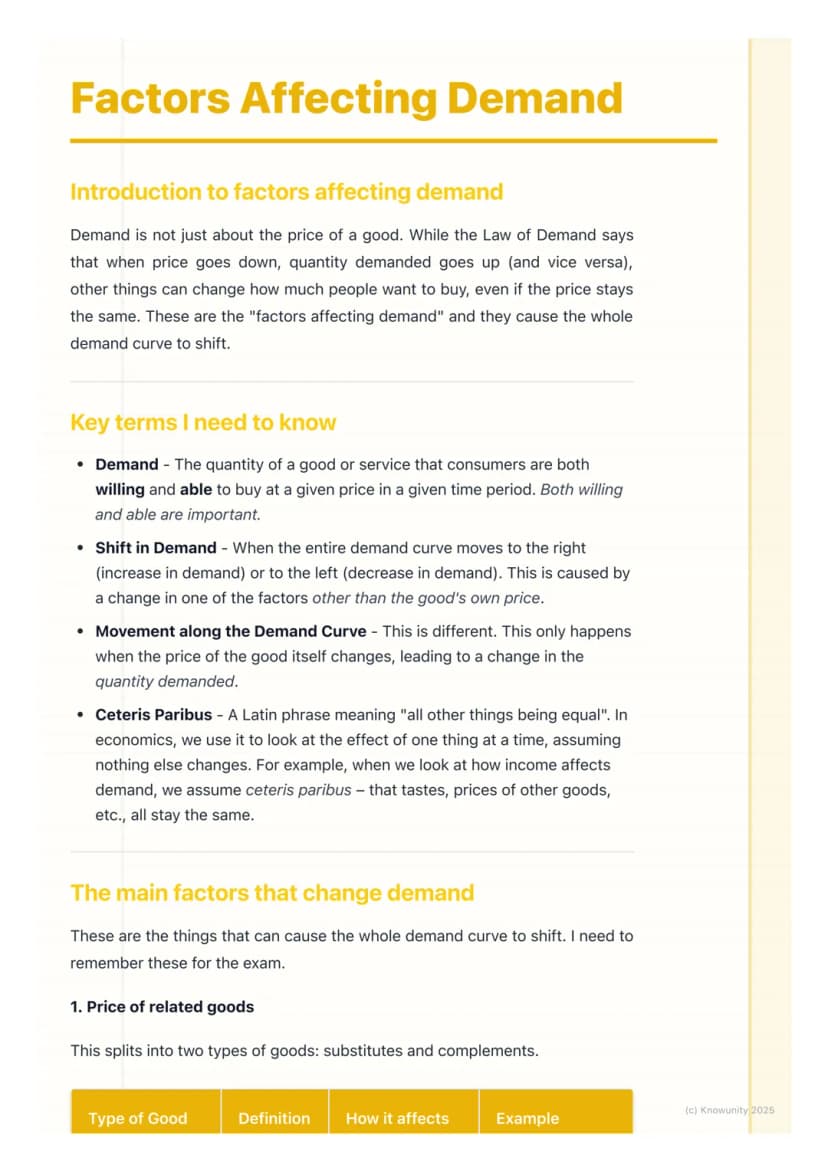
Demand isn't just about price - it's about how willing and able people are to buy something at a given price. Think of it like this: you might want the latest iPhone, but if you can't afford it, there's no actual demand from you.
The Law of Demand tells us that when prices drop, people generally buy more (and vice versa). But here's where it gets interesting - sometimes demand changes even when the price stays exactly the same.
When something other than price affects how much people want to buy, the entire demand curve shifts. This is completely different from just moving along the curve when price changes. Understanding this difference will save you marks in exams!
Key Tip: Remember ceteris paribus - "all other things being equal". Economists use this to study one factor at a time, assuming everything else stays constant.
2
of 5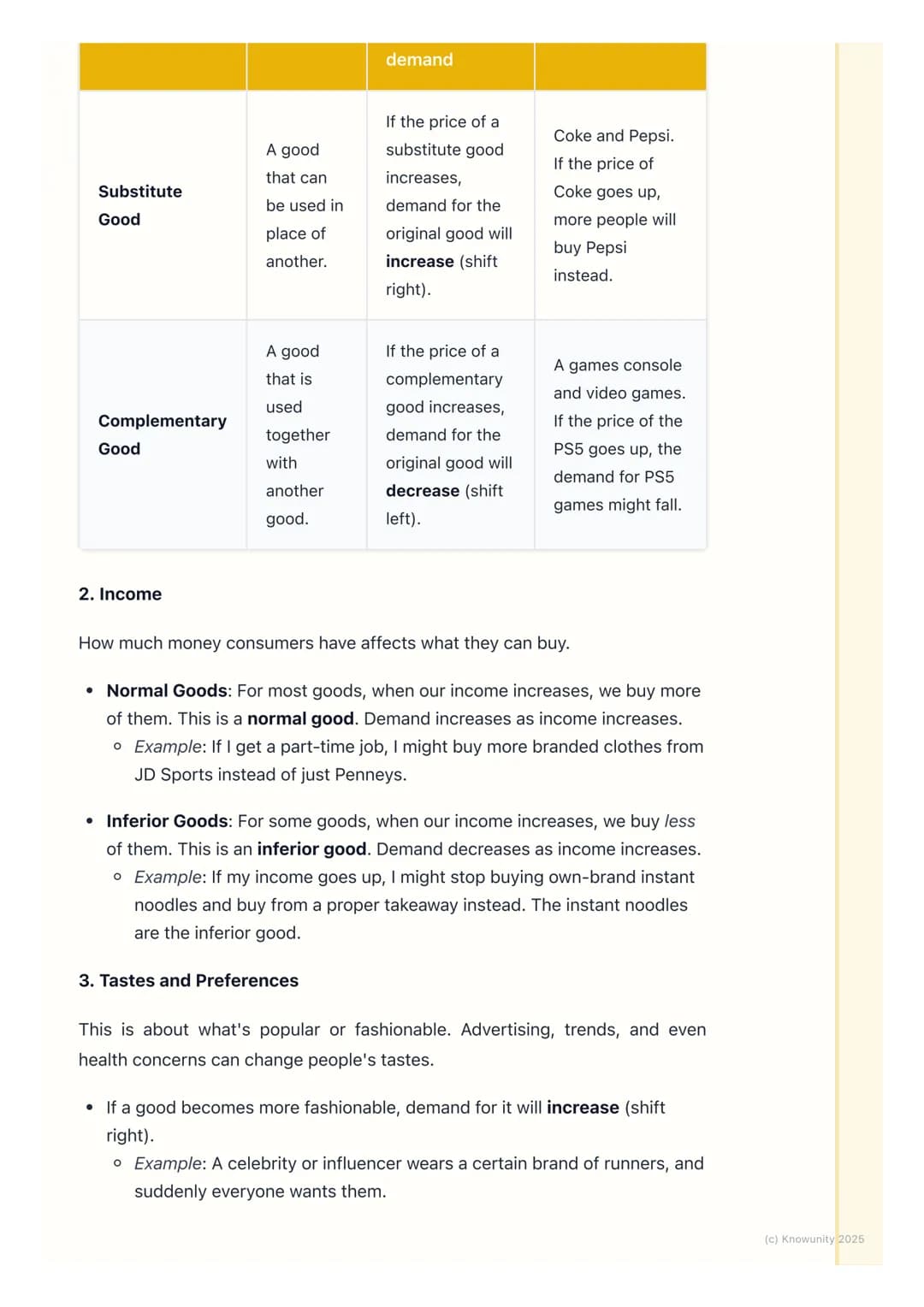
Related Goods: Substitutes and Complements
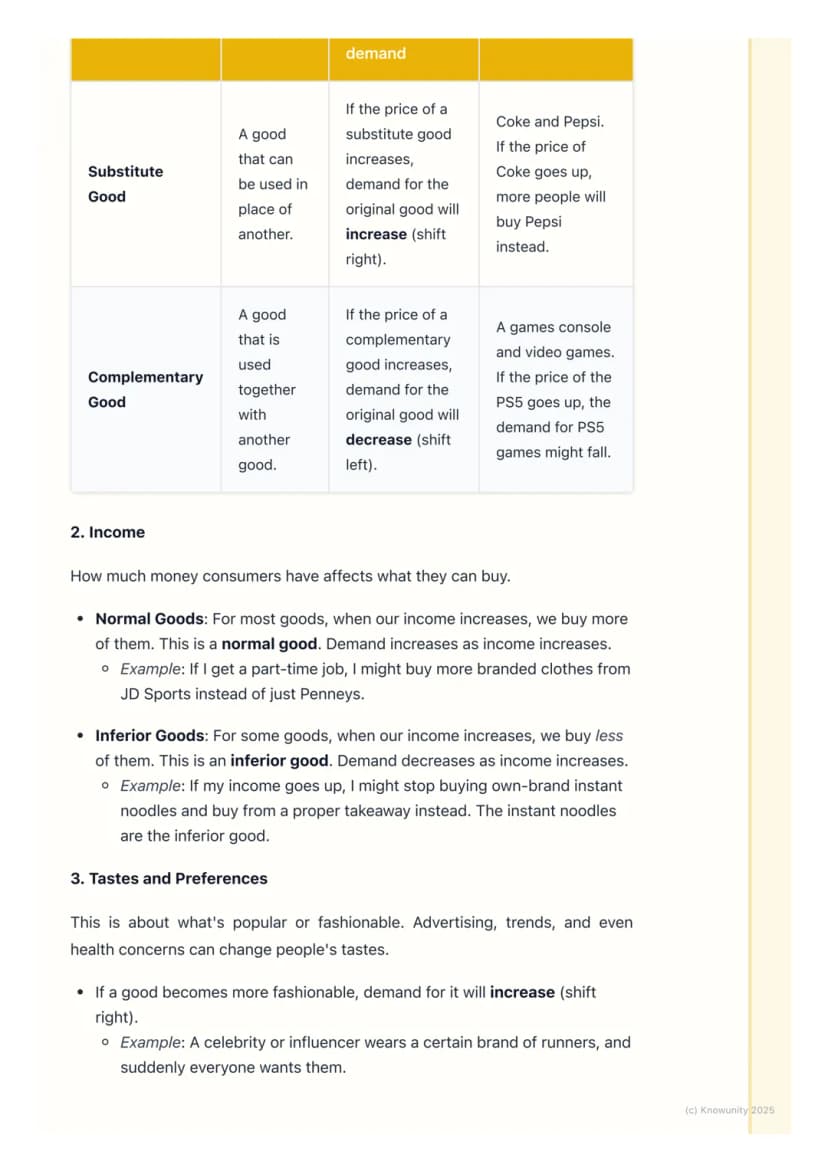
Substitute goods can replace each other - like Coke and Pepsi, or Netflix and Disney+. When Coke's price jumps up, suddenly Pepsi looks more attractive, so demand for Pepsi increases even though its price hasn't changed.
Complementary goods work together - think gaming consoles and games, or cars and petrol. If PlayStation 5 prices soar, fewer people buy the console, which means fewer people need PS5 games. So demand for games drops too.
This is dead useful for understanding real-world scenarios. When petrol prices spike, demand for fuel-efficient cars goes up whilst demand for gas-guzzling SUVs falls.
Quick Check: If two goods are substitutes and one gets more expensive, demand for the other increases. If they're complements and one gets pricier, demand for the other decreases.
3
of 5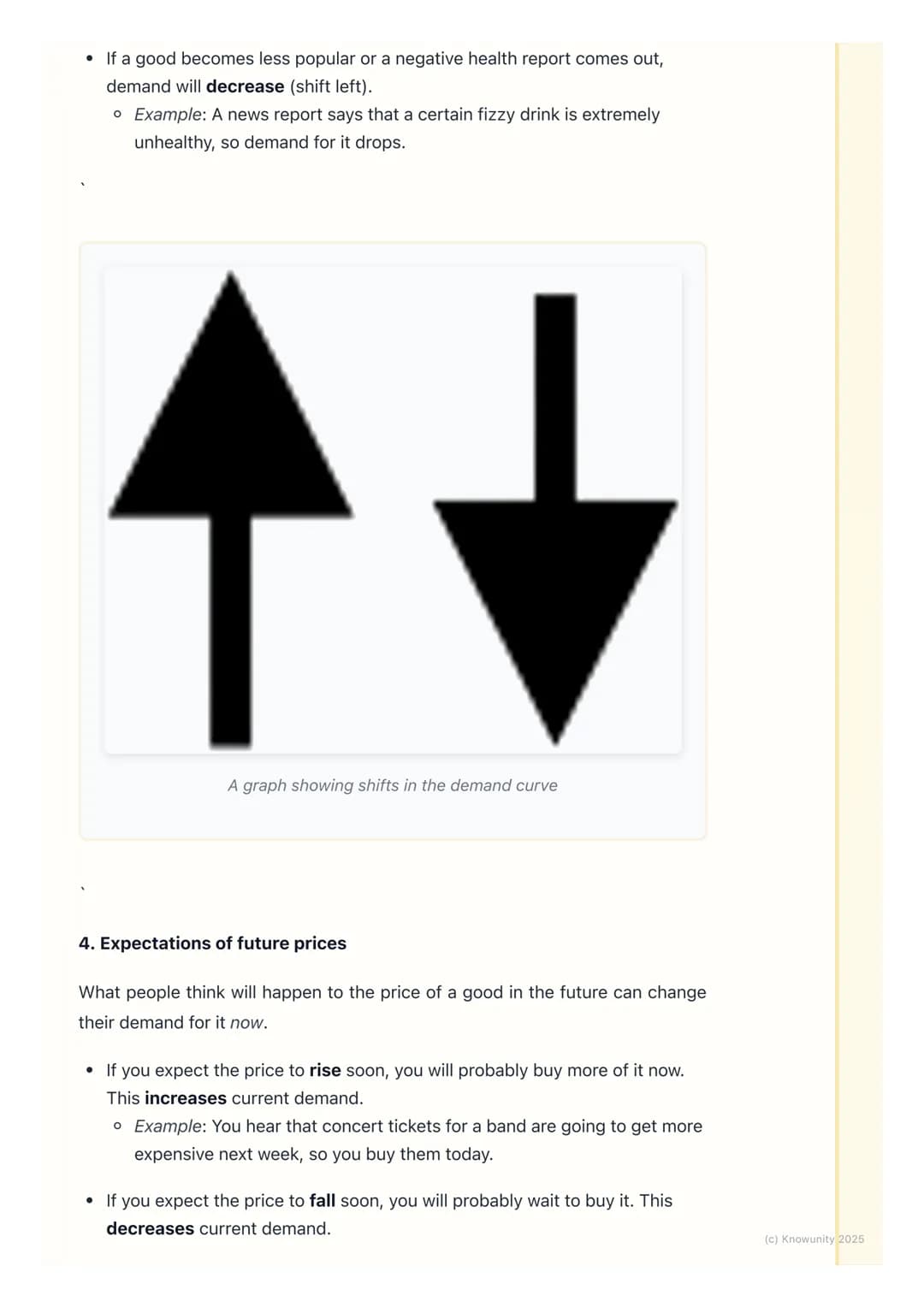
Income Effects: Normal vs Inferior Goods
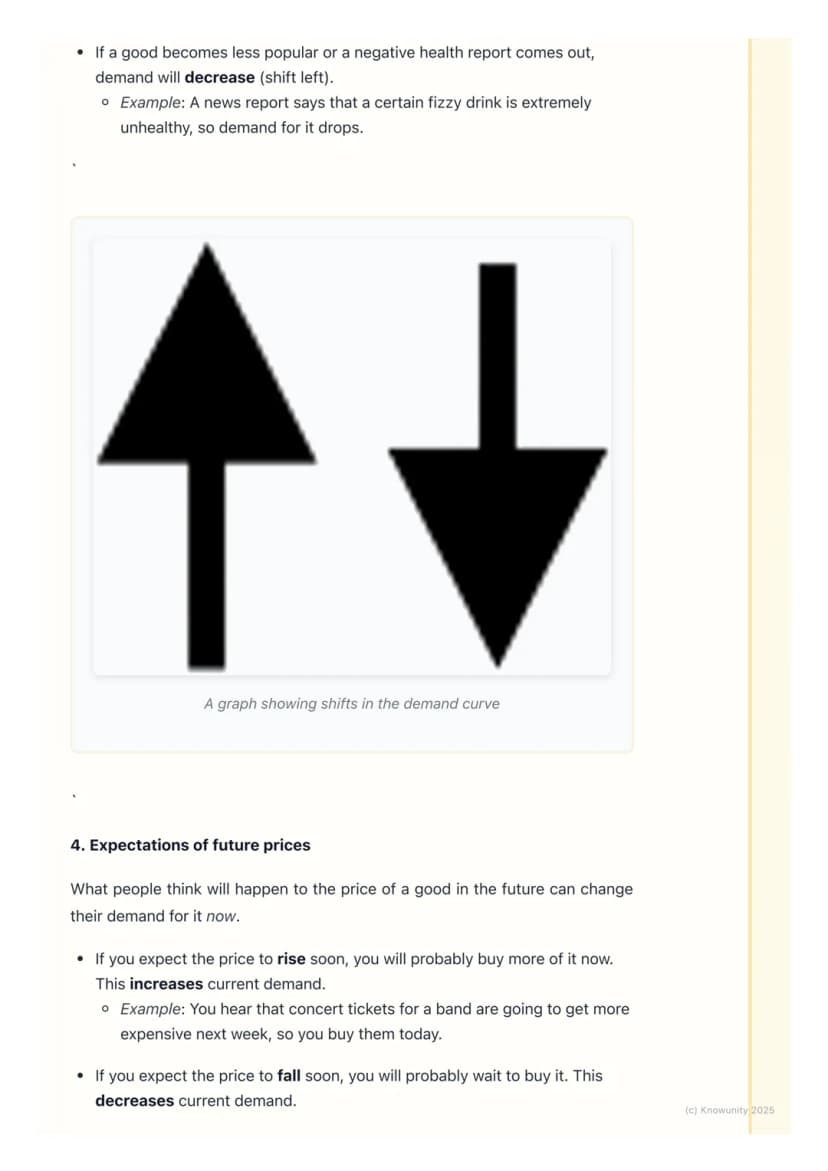
Your income massively affects what you buy, but not all goods react the same way. Normal goods are things you buy more of when you get richer - branded clothes, restaurant meals, or the latest tech.
Inferior goods work backwards - when your income rises, you actually buy less of them. Think own-brand instant noodles or second-hand clothes. Once you can afford better alternatives, you ditch the cheap stuff.
This explains why Penneys might see less demand during economic booms whilst Brown Thomas sees more. People trade up when they've got extra cash flowing in.
Real Example: Getting a part-time job means you might stop buying supermarket own-brand everything and start choosing branded products instead.
4
of 5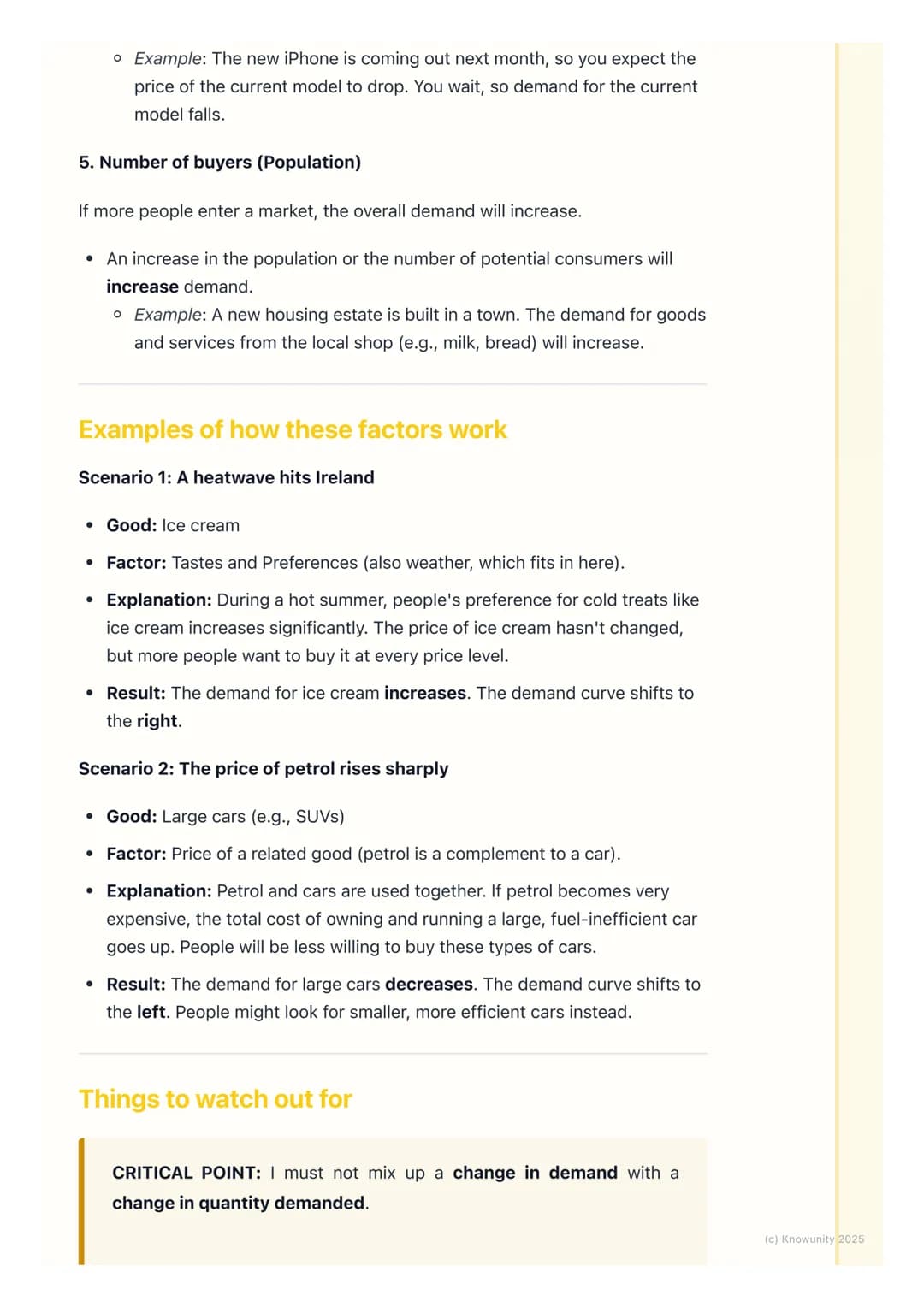
Tastes, Expectations, and Population Changes
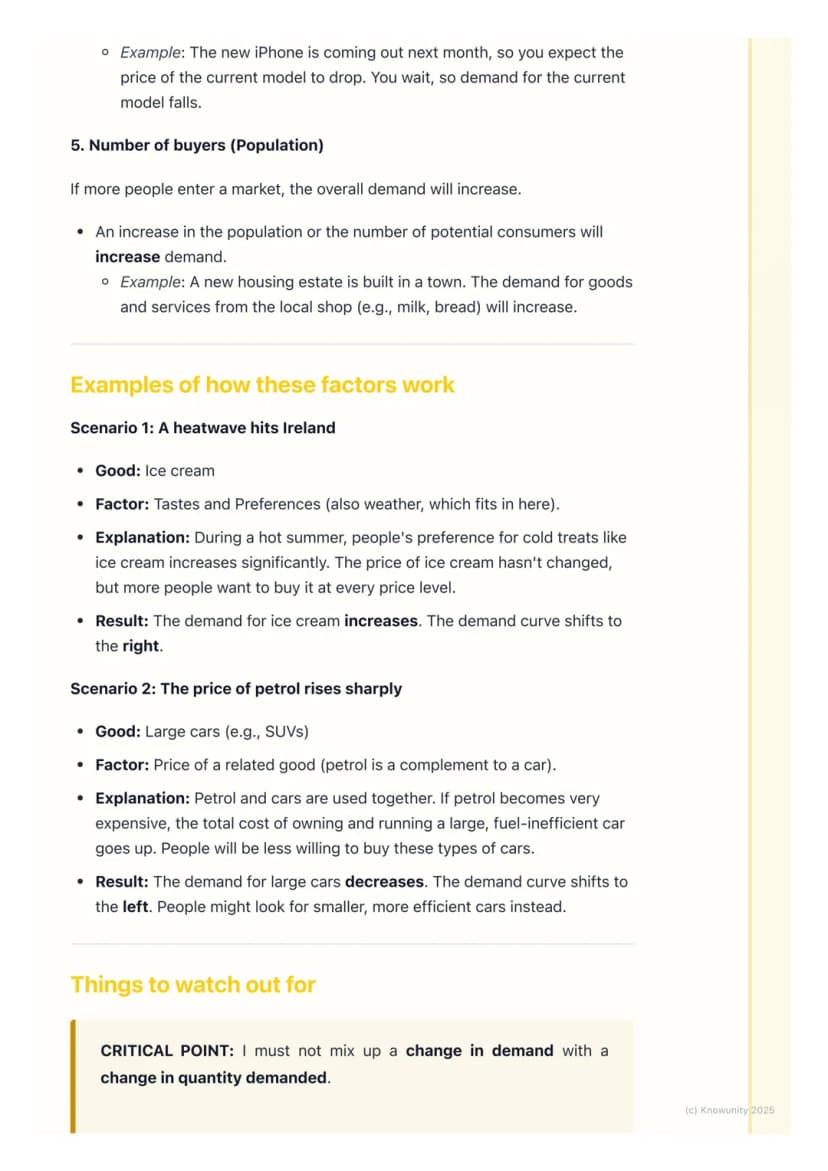
Tastes and preferences drive massive demand shifts. One TikTok trend can make certain trainers explode in popularity overnight. Celebrity endorsements, health scares, or just changing fashions all shift demand curves dramatically.
Future price expectations create interesting behaviour. If you think concert tickets will cost more next week, you'll buy them now - increasing current demand. But if you expect phone prices to drop when the new model launches, you'll wait.
Population changes are straightforward but powerful. More people in an area means higher demand for local services. New housing estates boost demand for everything from groceries to hairdressers.
Exam Alert: Don't confuse a movement along the demand curve (price change only) with a shift of the entire curve (caused by these factors).
5
of 5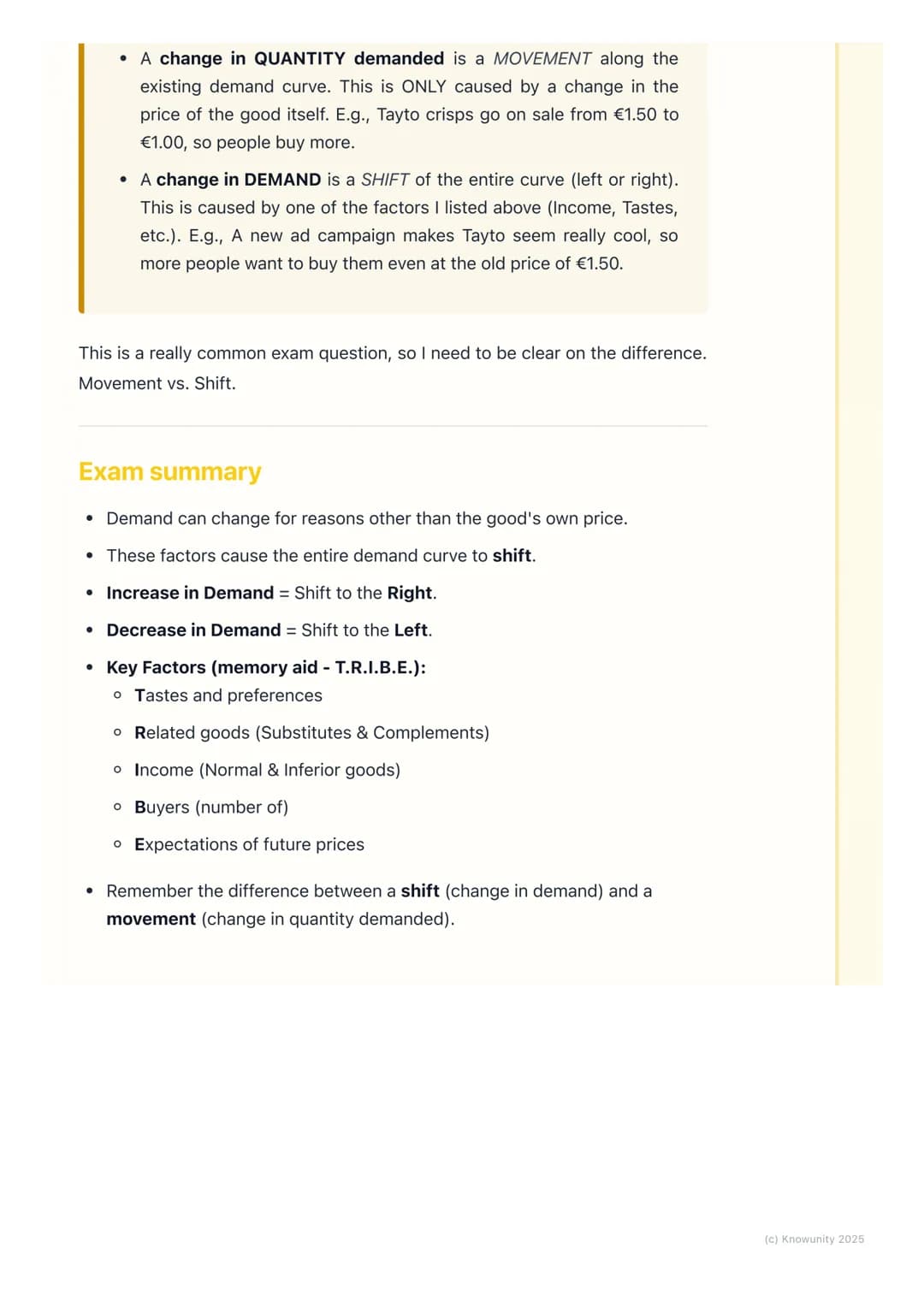
Putting It All Together
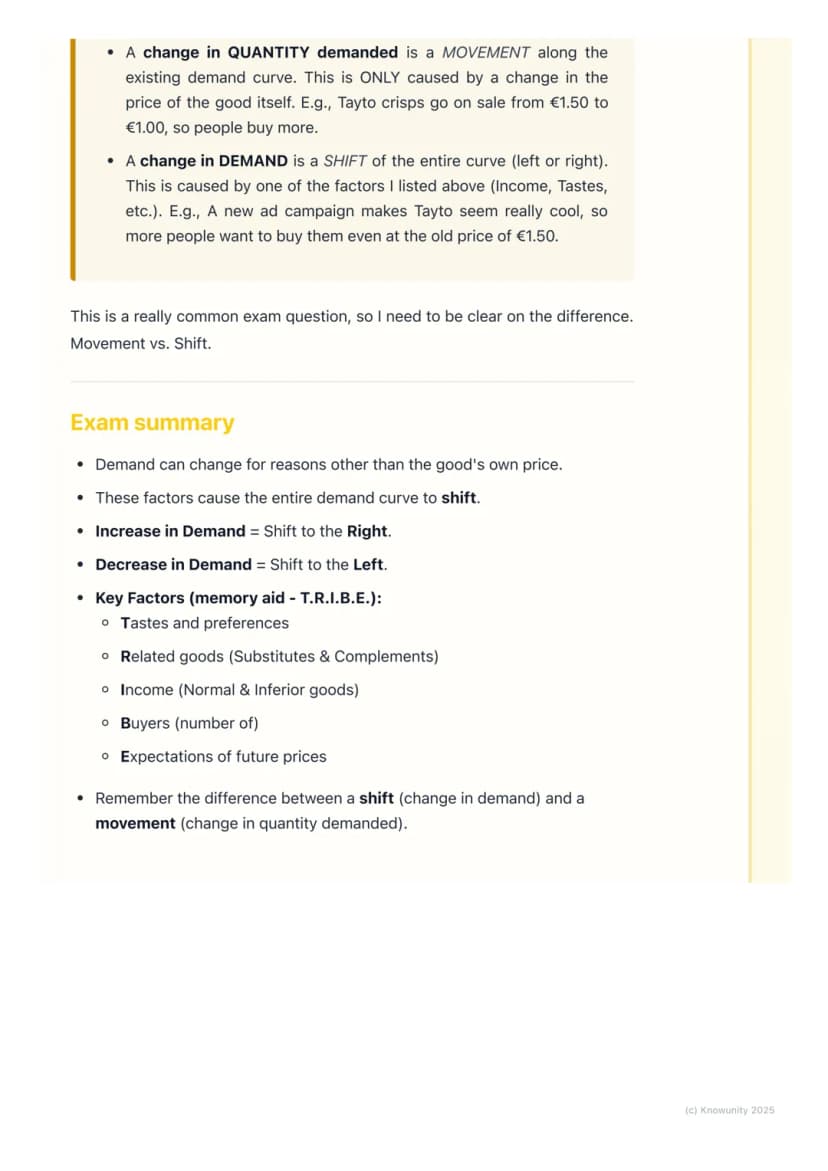
Here's your memory aid for exam success: T.R.I.B.E covers the main demand shifters - Tastes, Related goods, Income, Buyers (population), and Expectations of future prices.
Rightward shifts mean increased demand (more people want the good at every price level). Leftward shifts mean decreased demand (fewer people want it at every price level). The price itself hasn't changed - something else has influenced consumer behaviour.
Master the difference between demand changes and quantity demanded changes. This distinction appears in virtually every economics exam and catches loads of students out.
Exam Success: Practice identifying whether scenarios cause movements along the curve (price changes) or shifts of the entire curve (other factors). This skill will boost your marks significantly.
Mysleli jsme, že se nikdy nezeptáš...
Co je AI společník Knowunity?
Náš AI společník je speciálně vytvořen pro potřeby studentů. Na základě milionů obsahových materiálů, které máme na platformě, můžeme studentům poskytovat opravdu smysluplné a relevantní odpovědi. Ale nejde jen o odpovědi, společník je ještě více o provázení studentů jejich každodenními výzvami v učení, s personalizovanými studijními plány, kvízy nebo obsahovými materiály v chatu a 100% personalizací na základě dovedností a vývoje studentů.
Kde si můžu stáhnout aplikaci Knowunity?
Aplikaci si můžete stáhnout z obchodu Google Play a Apple App Store.
Jak můžu dostat svou platbu? Kolik si můžu vydělat?
Ano, máte bezplatný přístup k obsahu v aplikaci a k našemu společníkovi s umělou inteligencí. Chcete-li odemknout určité funkce aplikace, můžete si zakoupit aplikaci Knowunity Pro.
Nemůžeš najít, co hledáš? Prozkoumej další předměty.
Recenze od našich uživatelů. Mají vše super — a ty taky můžeš.
4.6/5App Store
4.7/5Google Play
Aplikace je velmi jednoduchá na používání a dobře navržená. Zatím jsem našel vše, co jsem hledal, a mohl jsem se z prezentací hodně naučit! Určitě použiju aplikaci na školní úkol! A samozřejmě taky hodně pomáhá jako inspirace.
Stefan Suživatel iOS
Tahle aplikace je fakt skvělá. Je tam tolik studijních poznámek a pomůcek [...]. Můj problémový předmět je například francouzština a aplikace nabízí tolik možností pomoci. Díky této aplikaci jsem si zlepšil francouzštinu. Doporučil bych ji každému.
Samantha Klichuživatelka Androidu
Páni, jsem opravdu ohromen. Zkusil jsem aplikaci jen proto, že jsem ji mnohokrát viděl v reklamách, a byl jsem naprosto ohromen. Tato aplikace je TA POMOC, kterou chceš do školy, a především nabízí spoustu věcí, jako jsou cvičení a přehledy faktů, které mi osobně VELMI pomohly.
Annauživatelka iOS
Economics1 zobrazení·Aktualizováno Jun 9, 2026·5 stránekKey Factors Influencing Consumer Demand
Ever wonder why everyone suddenly wants the same trainers, or why nobody buys certain sweets anymore? It's not just about price - loads of other factors can change how much people want to buy something. Understanding these demand shifters is...
1
of 5
Registruj se, abys viděl obsah. Je to zdarma!
- Přístup ke všem dokumentům
- Zlepši své známky
- Připoj se k milionům studentů
Understanding Demand Basics
Demand isn't just about price - it's about how willing and able people are to buy something at a given price. Think of it like this: you might want the latest iPhone, but if you can't afford it, there's no actual demand from you.
The Law of Demand tells us that when prices drop, people generally buy more (and vice versa). But here's where it gets interesting - sometimes demand changes even when the price stays exactly the same.
When something other than price affects how much people want to buy, the entire demand curve shifts. This is completely different from just moving along the curve when price changes. Understanding this difference will save you marks in exams!
Key Tip: Remember ceteris paribus - "all other things being equal". Economists use this to study one factor at a time, assuming everything else stays constant.
2
of 5Registruj se, abys viděl obsah. Je to zdarma!
- Přístup ke všem dokumentům
- Zlepši své známky
- Připoj se k milionům studentů
Related Goods: Substitutes and Complements
Substitute goods can replace each other - like Coke and Pepsi, or Netflix and Disney+. When Coke's price jumps up, suddenly Pepsi looks more attractive, so demand for Pepsi increases even though its price hasn't changed.
Complementary goods work together - think gaming consoles and games, or cars and petrol. If PlayStation 5 prices soar, fewer people buy the console, which means fewer people need PS5 games. So demand for games drops too.
This is dead useful for understanding real-world scenarios. When petrol prices spike, demand for fuel-efficient cars goes up whilst demand for gas-guzzling SUVs falls.
Quick Check: If two goods are substitutes and one gets more expensive, demand for the other increases. If they're complements and one gets pricier, demand for the other decreases.
3
of 5Registruj se, abys viděl obsah. Je to zdarma!
- Přístup ke všem dokumentům
- Zlepši své známky
- Připoj se k milionům studentů
Income Effects: Normal vs Inferior Goods
Your income massively affects what you buy, but not all goods react the same way. Normal goods are things you buy more of when you get richer - branded clothes, restaurant meals, or the latest tech.
Inferior goods work backwards - when your income rises, you actually buy less of them. Think own-brand instant noodles or second-hand clothes. Once you can afford better alternatives, you ditch the cheap stuff.
This explains why Penneys might see less demand during economic booms whilst Brown Thomas sees more. People trade up when they've got extra cash flowing in.
Real Example: Getting a part-time job means you might stop buying supermarket own-brand everything and start choosing branded products instead.
4
of 5Registruj se, abys viděl obsah. Je to zdarma!
- Přístup ke všem dokumentům
- Zlepši své známky
- Připoj se k milionům studentů
Tastes, Expectations, and Population Changes
Tastes and preferences drive massive demand shifts. One TikTok trend can make certain trainers explode in popularity overnight. Celebrity endorsements, health scares, or just changing fashions all shift demand curves dramatically.
Future price expectations create interesting behaviour. If you think concert tickets will cost more next week, you'll buy them now - increasing current demand. But if you expect phone prices to drop when the new model launches, you'll wait.
Population changes are straightforward but powerful. More people in an area means higher demand for local services. New housing estates boost demand for everything from groceries to hairdressers.
Exam Alert: Don't confuse a movement along the demand curve (price change only) with a shift of the entire curve (caused by these factors).
5
of 5Registruj se, abys viděl obsah. Je to zdarma!
- Přístup ke všem dokumentům
- Zlepši své známky
- Připoj se k milionům studentů
Putting It All Together
Here's your memory aid for exam success: T.R.I.B.E covers the main demand shifters - Tastes, Related goods, Income, Buyers (population), and Expectations of future prices.
Rightward shifts mean increased demand (more people want the good at every price level). Leftward shifts mean decreased demand (fewer people want it at every price level). The price itself hasn't changed - something else has influenced consumer behaviour.
Master the difference between demand changes and quantity demanded changes. This distinction appears in virtually every economics exam and catches loads of students out.
Exam Success: Practice identifying whether scenarios cause movements along the curve (price changes) or shifts of the entire curve (other factors). This skill will boost your marks significantly.
Mysleli jsme, že se nikdy nezeptáš...
Co je AI společník Knowunity?
Náš AI společník je speciálně vytvořen pro potřeby studentů. Na základě milionů obsahových materiálů, které máme na platformě, můžeme studentům poskytovat opravdu smysluplné a relevantní odpovědi. Ale nejde jen o odpovědi, společník je ještě více o provázení studentů jejich každodenními výzvami v učení, s personalizovanými studijními plány, kvízy nebo obsahovými materiály v chatu a 100% personalizací na základě dovedností a vývoje studentů.
Kde si můžu stáhnout aplikaci Knowunity?
Aplikaci si můžete stáhnout z obchodu Google Play a Apple App Store.
Jak můžu dostat svou platbu? Kolik si můžu vydělat?
Ano, máte bezplatný přístup k obsahu v aplikaci a k našemu společníkovi s umělou inteligencí. Chcete-li odemknout určité funkce aplikace, můžete si zakoupit aplikaci Knowunity Pro.
Nemůžeš najít, co hledáš? Prozkoumej další předměty.
Recenze od našich uživatelů. Mají vše super — a ty taky můžeš.
4.6/5App Store
4.7/5Google Play
Aplikace je velmi jednoduchá na používání a dobře navržená. Zatím jsem našel vše, co jsem hledal, a mohl jsem se z prezentací hodně naučit! Určitě použiju aplikaci na školní úkol! A samozřejmě taky hodně pomáhá jako inspirace.
Stefan Suživatel iOS
Tahle aplikace je fakt skvělá. Je tam tolik studijních poznámek a pomůcek [...]. Můj problémový předmět je například francouzština a aplikace nabízí tolik možností pomoci. Díky této aplikaci jsem si zlepšil francouzštinu. Doporučil bych ji každému.
Samantha Klichuživatelka Androidu
Páni, jsem opravdu ohromen. Zkusil jsem aplikaci jen proto, že jsem ji mnohokrát viděl v reklamách, a byl jsem naprosto ohromen. Tato aplikace je TA POMOC, kterou chceš do školy, a především nabízí spoustu věcí, jako jsou cvičení a přehledy faktů, které mi osobně VELMI pomohly.
Annauživatelka iOS