
Ever wonder how your iPhone gets from raw materials to... Zobrazit více
 Business Studies7 zobrazení·Aktualizováno Jun 3, 2026·5 stránek
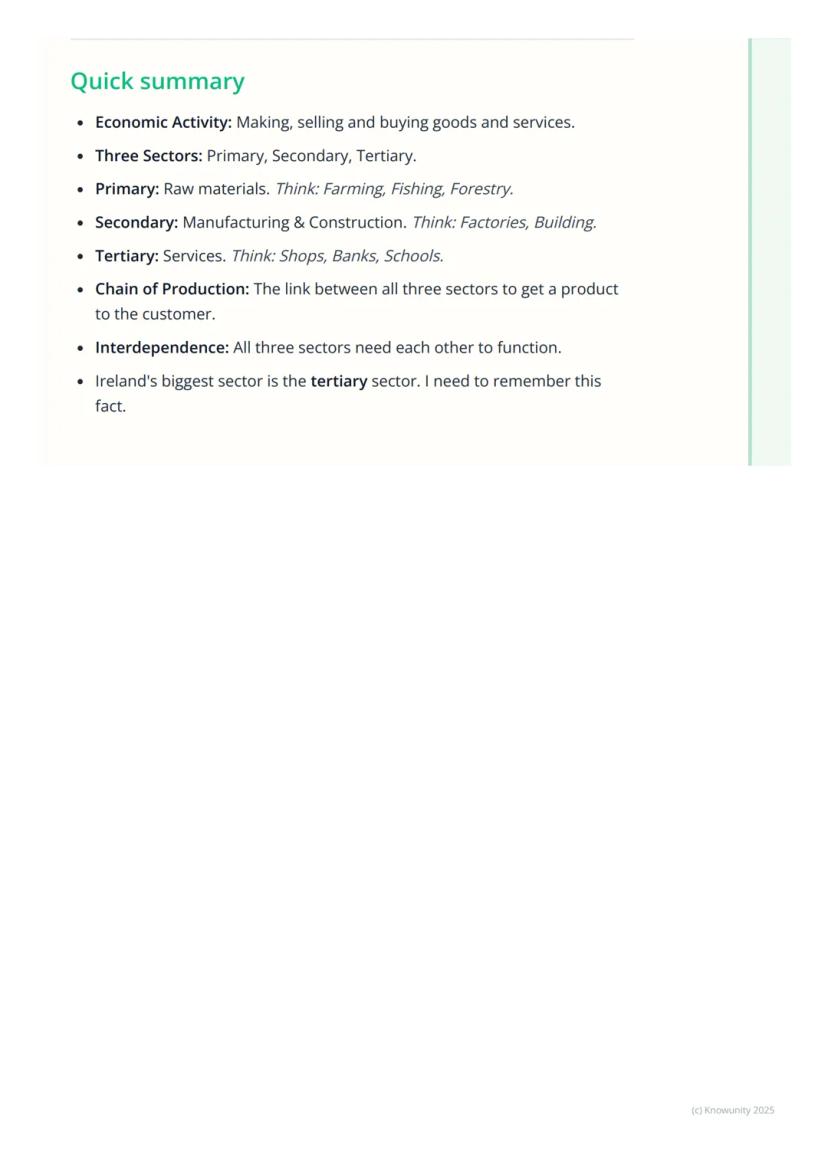
Exploring the Sectors of Economic Activity
1 / 5
1
of 5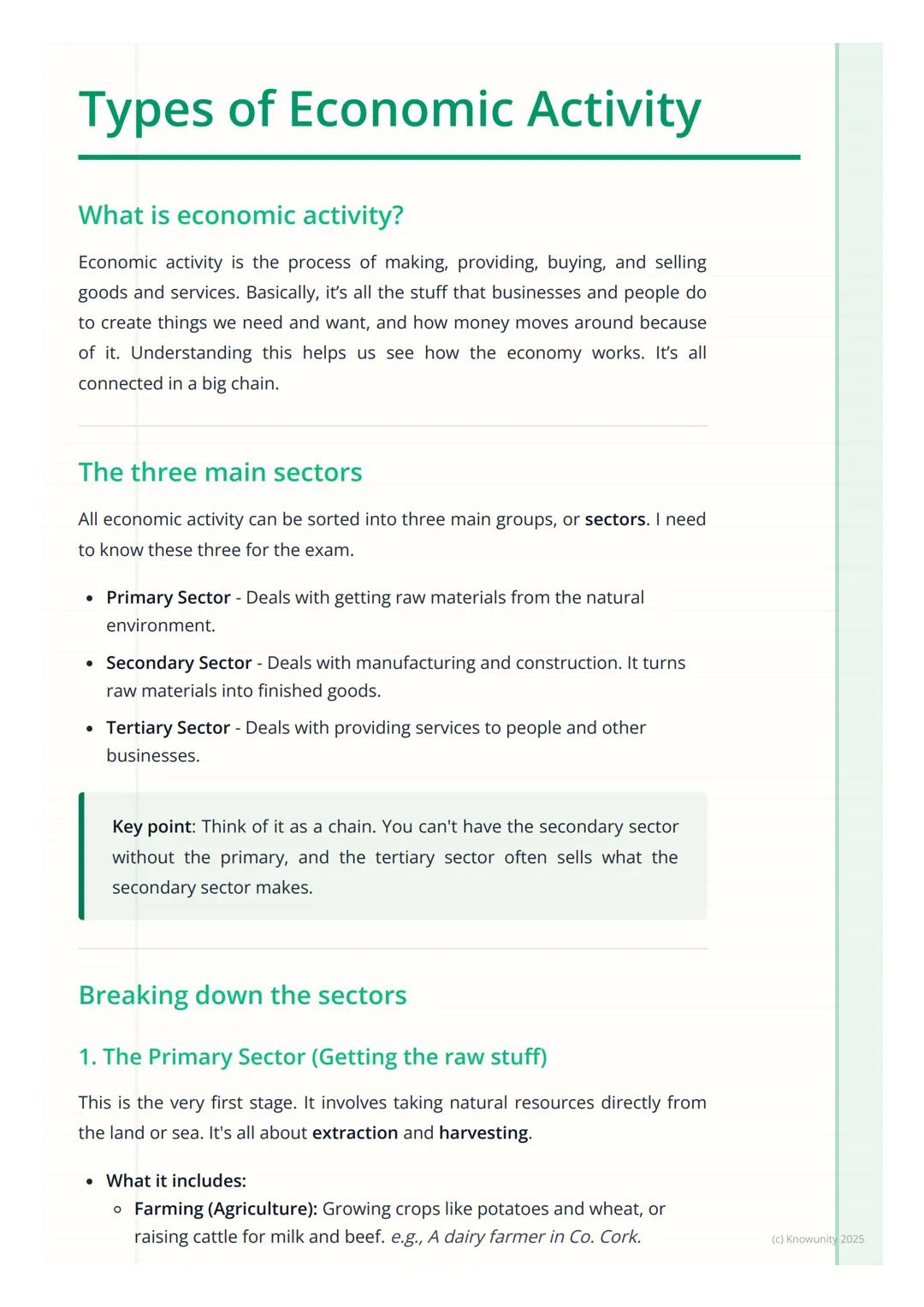
What is Economic Activity?
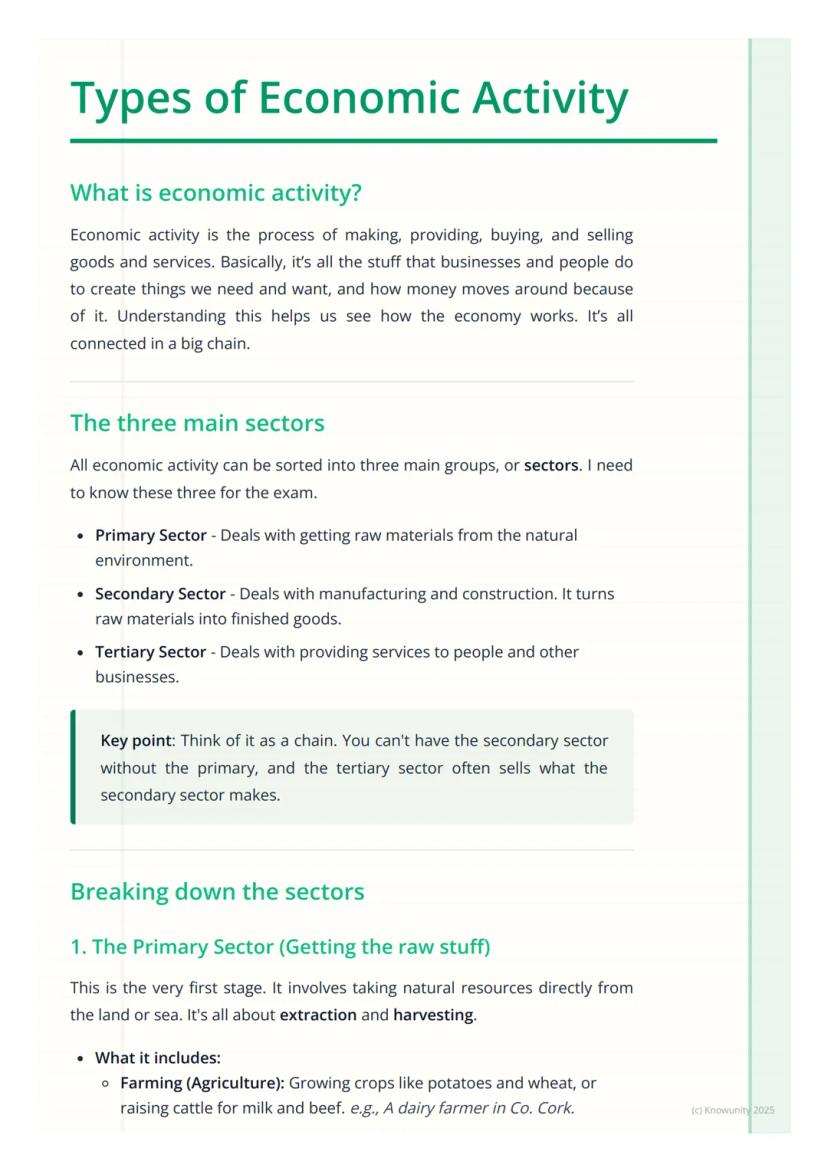
Think of economic activity as everything people and businesses do to create stuff we need and want - from growing food to building houses to running shops. It's basically how money moves around the economy and how we get all the things that make our lives work.
All this activity gets sorted into three main sectors: Primary, Secondary, and Tertiary. Here's the thing - they're all connected like links in a chain. You literally can't have one without the others.
Primary Sector deals with getting raw materials straight from nature. Secondary Sector takes those materials and turns them into finished products. Tertiary Sector provides services to people and businesses.
Key Point: Ireland's economy relies heavily on all three sectors working together - no single sector can survive on its own!
2
of 5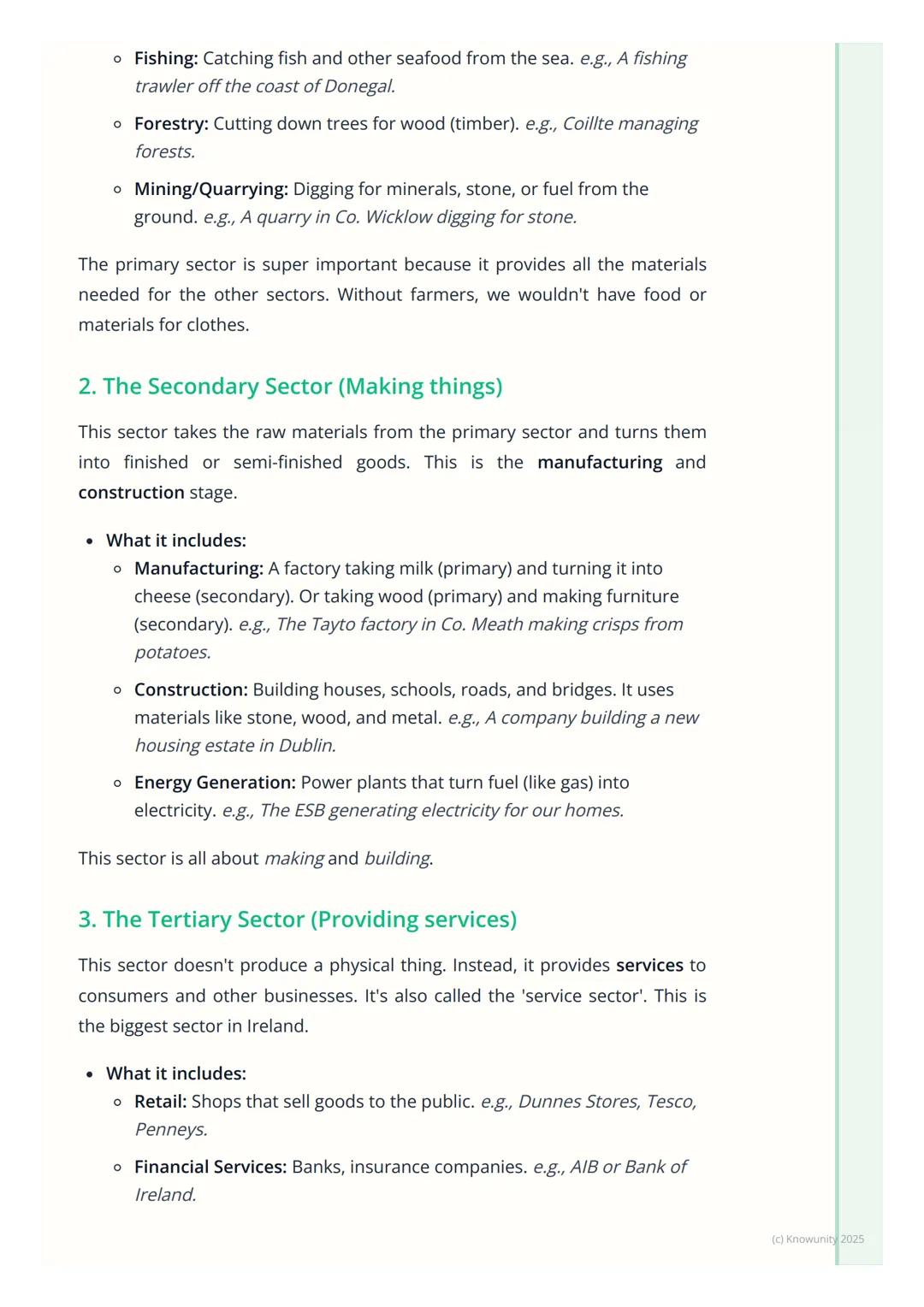
Primary Sector - Getting the Raw Stuff
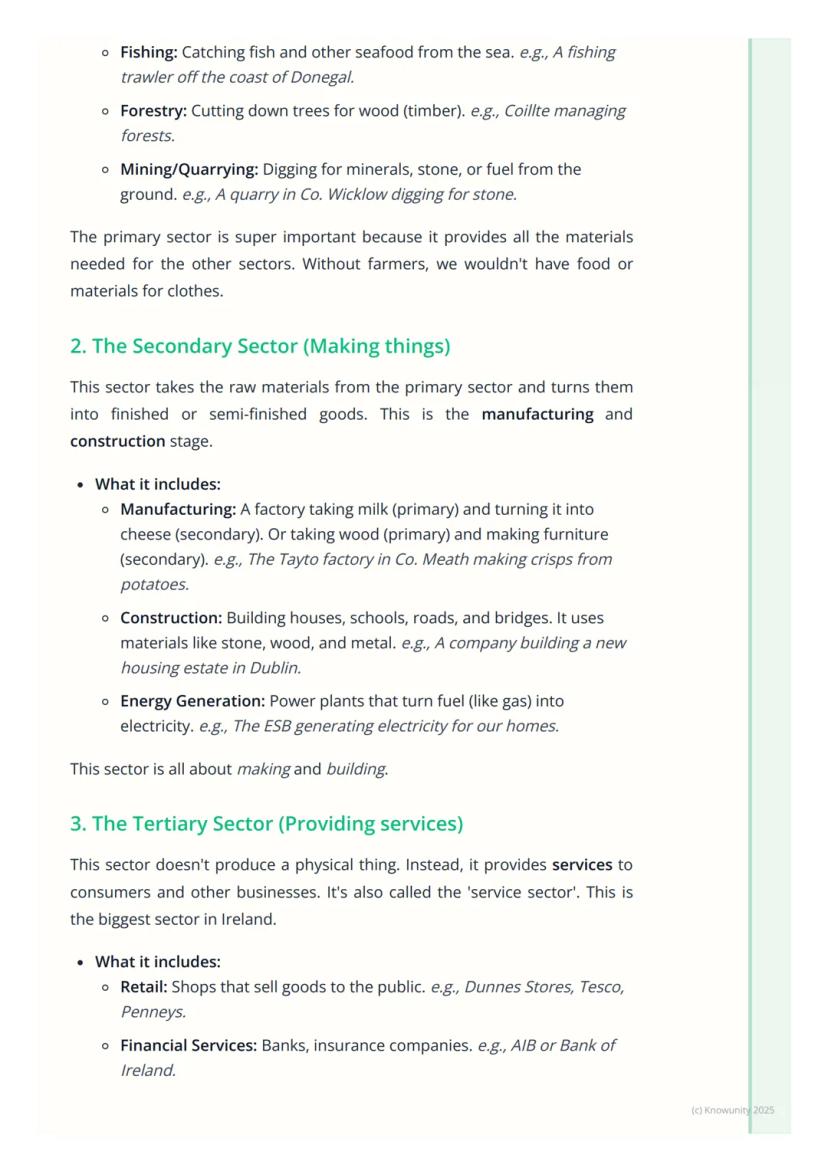
The Primary Sector is where it all begins - extracting natural resources directly from the land or sea. Think farmers, fishers, and anyone who digs stuff up from the ground.
This includes farming (like dairy farmers in Cork growing crops or raising cattle), fishing (trawlers off Donegal's coast), forestry (Coillte managing Ireland's forests), and mining/quarrying (stone quarries in Wicklow).
Without the primary sector, literally nothing else would exist. No food, no materials for clothes, no wood for furniture - you get the idea.
Remember: Primary = getting stuff straight from nature, no processing involved yet!
3
of 5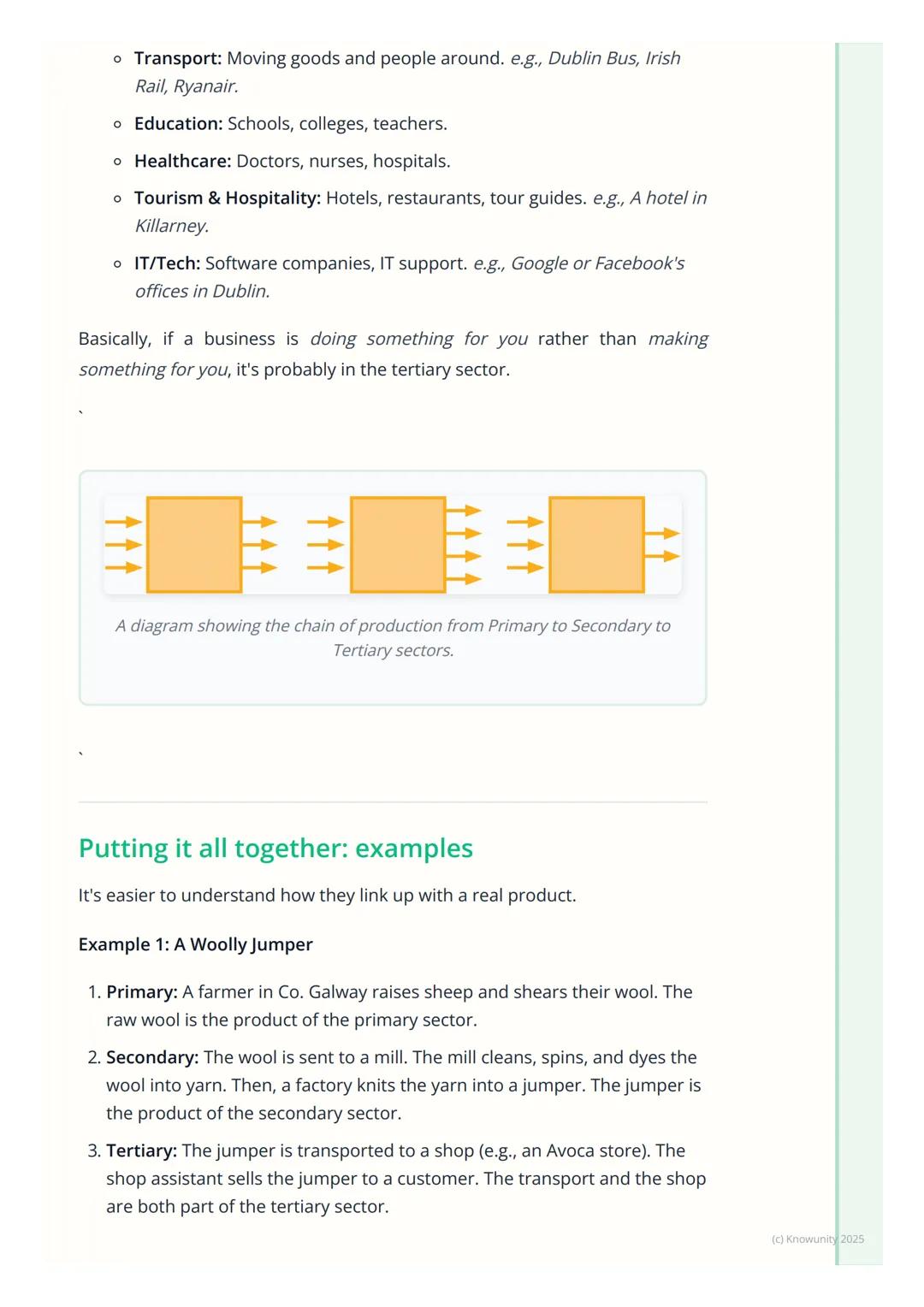
Secondary Sector - Making Things
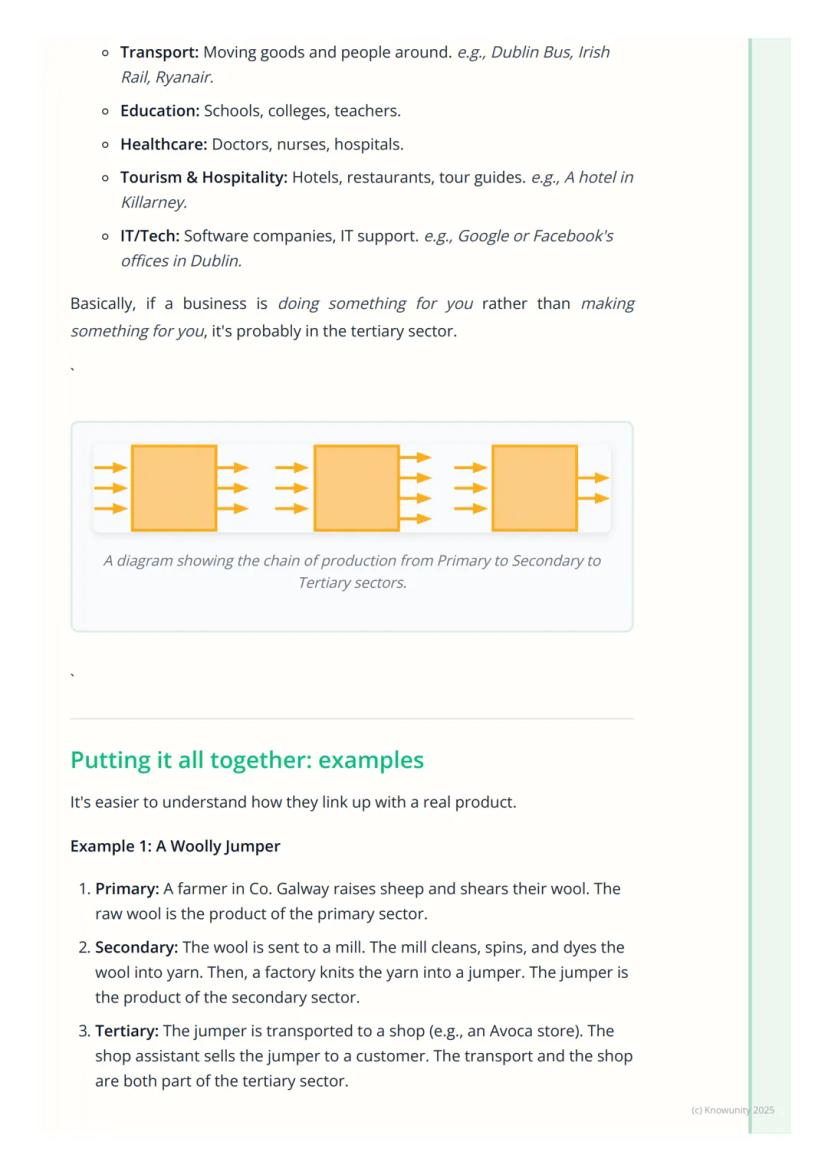
The Secondary Sector takes those raw materials and transforms them into actual products people can use. This is all about manufacturing and construction.
Manufacturing means factories turning milk into cheese, wood into furniture, or potatoes into Tayto crisps in Meath. Construction covers building houses, schools, and roads using materials like stone and timber.
Energy generation also fits here - power plants turning fuel into electricity for your home. Basically, if someone's making or building something physical, it's secondary sector.
Quick Check: Secondary = turning raw materials into finished products that people actually want to buy!
4
of 5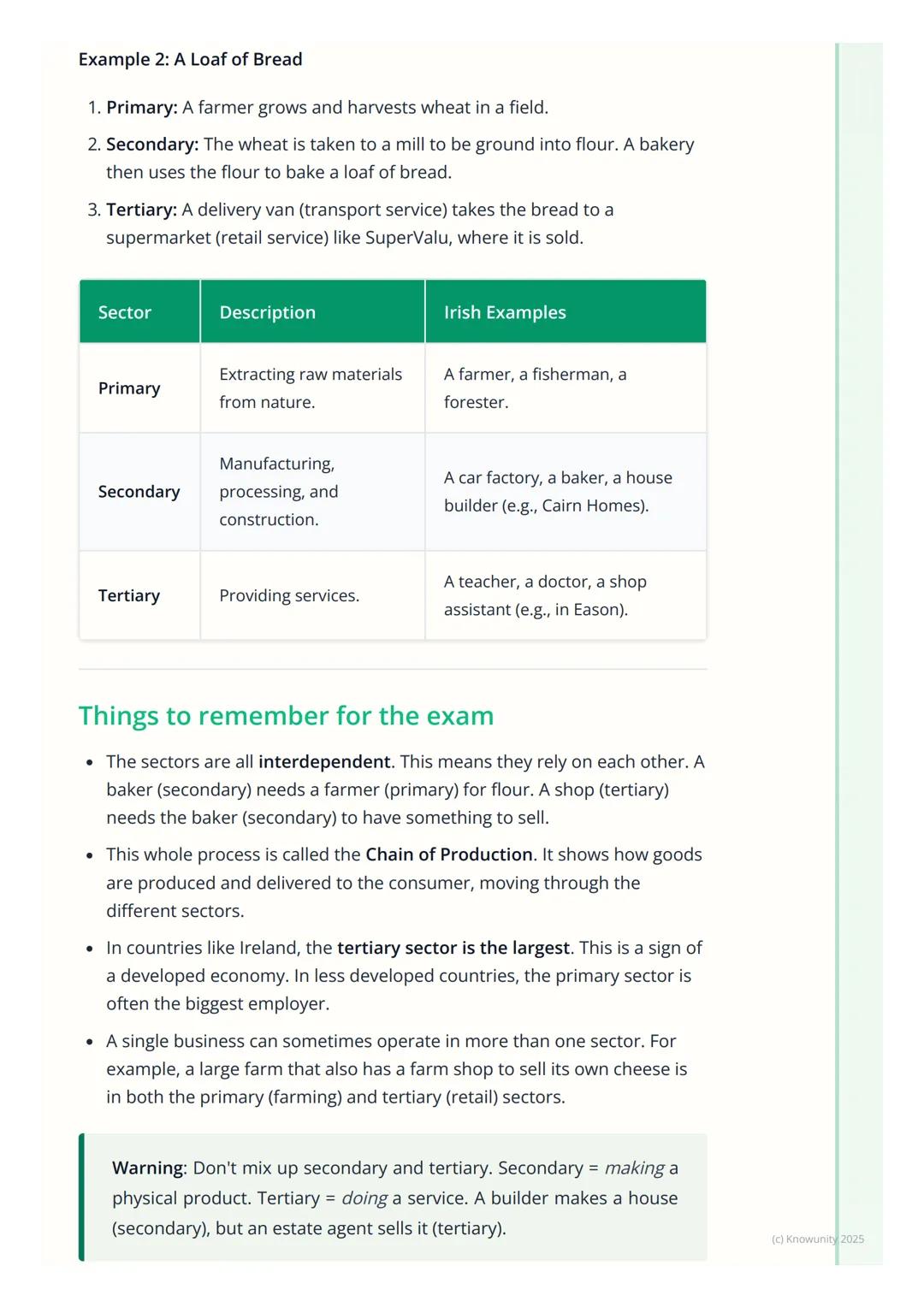
Tertiary Sector - Providing Services
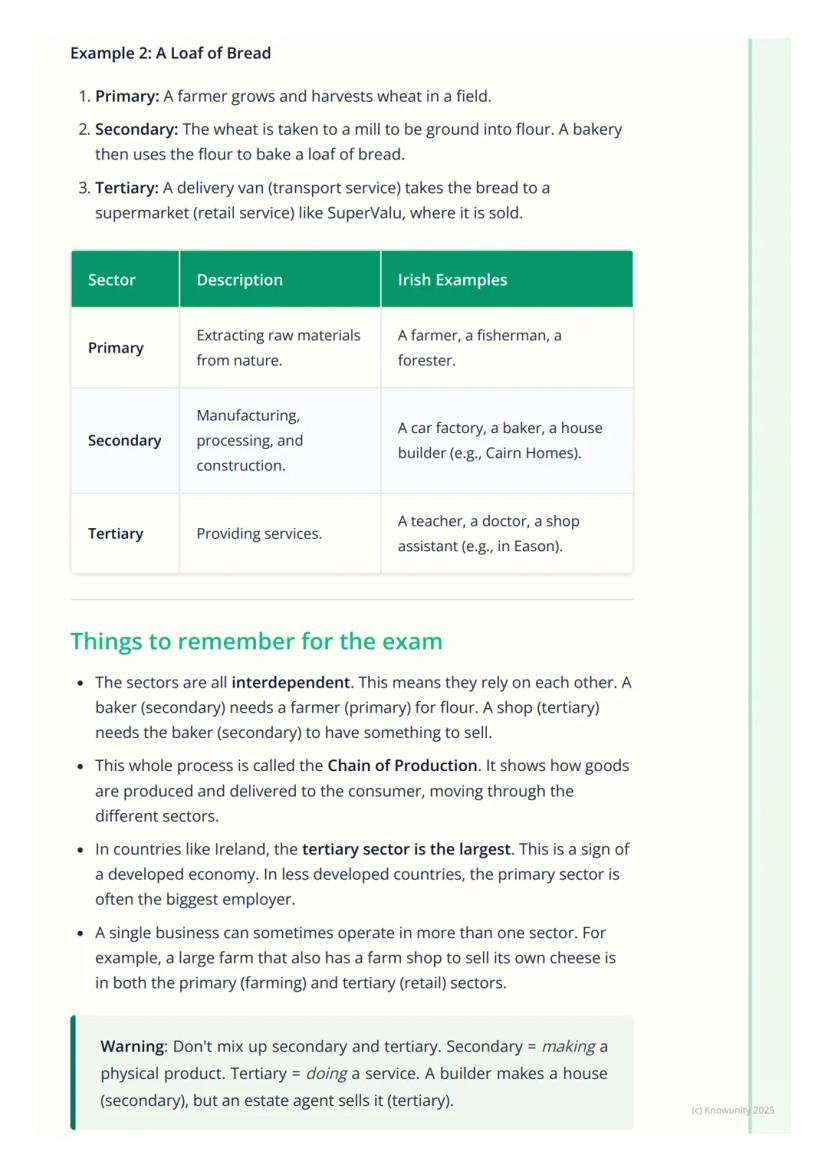
The Tertiary Sector doesn't make physical things - it provides services to people and businesses. This is actually Ireland's biggest sector, which shows we're a developed economy.
This includes retail (Dunnes Stores, Tesco), financial services (AIB, Bank of Ireland), transport (Dublin Bus, Ryanair), education (schools and teachers), healthcare (doctors and hospitals), and tourism (hotels in Killarney).
If a business is doing something for you rather than making something for you, it's probably tertiary sector. Ireland's economy massively depends on this sector.
Pro Tip: If you can't physically hold what the business produces, it's likely a tertiary sector service!
5
of 5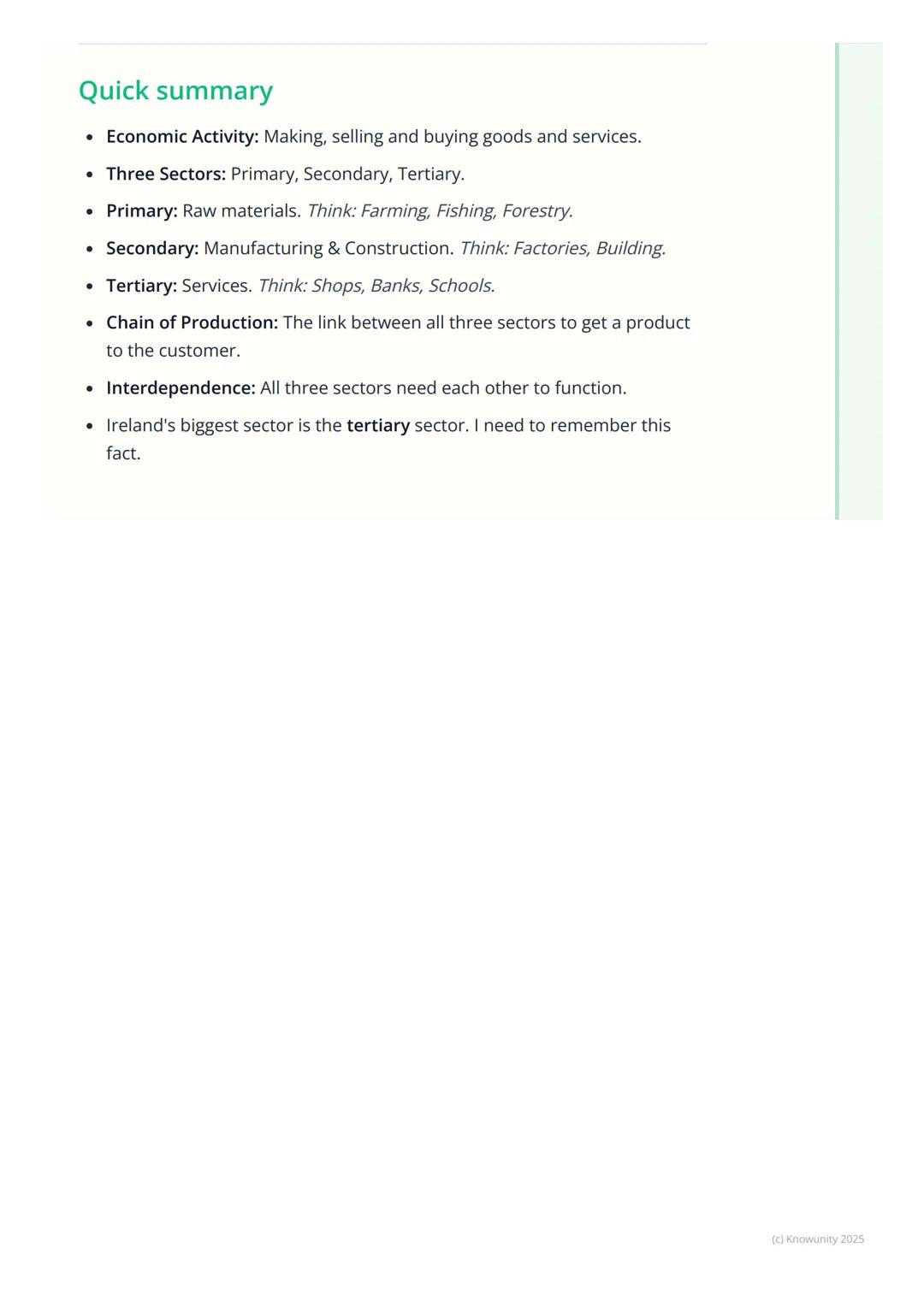
The Chain of Production
Here's how it all connects with real examples. Take a woolly jumper: farmers raise sheep (primary), mills turn wool into yarn and knit jumpers (secondary), then Avoca stores sell them to customers (tertiary).
Or a loaf of bread: farmers grow wheat (primary), mills grind flour and bakeries make bread (secondary), SuperValu sells it (tertiary). Each sector depends on the others - this is called interdependence.
The Chain of Production shows how products move through all three sectors to reach consumers. In Ireland, tertiary is biggest, but we still need primary and secondary to function.
Exam Alert: Remember that all sectors are interdependent - they absolutely cannot work without each other!
Mysleli jsme, že se nikdy nezeptáš...
Co je AI společník Knowunity?
Náš AI společník je speciálně vytvořen pro potřeby studentů. Na základě milionů obsahových materiálů, které máme na platformě, můžeme studentům poskytovat opravdu smysluplné a relevantní odpovědi. Ale nejde jen o odpovědi, společník je ještě více o provázení studentů jejich každodenními výzvami v učení, s personalizovanými studijními plány, kvízy nebo obsahovými materiály v chatu a 100% personalizací na základě dovedností a vývoje studentů.
Kde si můžu stáhnout aplikaci Knowunity?
Aplikaci si můžete stáhnout z obchodu Google Play a Apple App Store.
Jak můžu dostat svou platbu? Kolik si můžu vydělat?
Ano, máte bezplatný přístup k obsahu v aplikaci a k našemu společníkovi s umělou inteligencí. Chcete-li odemknout určité funkce aplikace, můžete si zakoupit aplikaci Knowunity Pro.
Nejpopulárnější poznámky z Business Studies
1Nejpopulárnější poznámky
9Nemůžeš najít, co hledáš? Prozkoumej další předměty.
Recenze od našich uživatelů. Mají vše super — a ty taky můžeš.
4.6/5App Store
4.7/5Google Play
Aplikace je velmi jednoduchá na používání a dobře navržená. Zatím jsem našel vše, co jsem hledal, a mohl jsem se z prezentací hodně naučit! Určitě použiju aplikaci na školní úkol! A samozřejmě taky hodně pomáhá jako inspirace.
Stefan Suživatel iOS
Tahle aplikace je fakt skvělá. Je tam tolik studijních poznámek a pomůcek [...]. Můj problémový předmět je například francouzština a aplikace nabízí tolik možností pomoci. Díky této aplikaci jsem si zlepšil francouzštinu. Doporučil bych ji každému.
Samantha Klichuživatelka Androidu
Páni, jsem opravdu ohromen. Zkusil jsem aplikaci jen proto, že jsem ji mnohokrát viděl v reklamách, a byl jsem naprosto ohromen. Tato aplikace je TA POMOC, kterou chceš do školy, a především nabízí spoustu věcí, jako jsou cvičení a přehledy faktů, které mi osobně VELMI pomohly.
Annauživatelka iOS
Business Studies7 zobrazení·Aktualizováno Jun 3, 2026·5 stránekExploring the Sectors of Economic Activity
Ever wonder how your iPhone gets from raw materials to your pocket, or why some countries focus more on farming whilst others are all about services? Economic activity is basically all the making, buying, and selling that happens around us... Zobrazit více
1
of 5Registruj se, abys viděl obsah. Je to zdarma!
- Přístup ke všem dokumentům
- Zlepši své známky
- Připoj se k milionům studentů
What is Economic Activity?
Think of economic activity as everything people and businesses do to create stuff we need and want - from growing food to building houses to running shops. It's basically how money moves around the economy and how we get all the things that make our lives work.
All this activity gets sorted into three main sectors: Primary, Secondary, and Tertiary. Here's the thing - they're all connected like links in a chain. You literally can't have one without the others.
Primary Sector deals with getting raw materials straight from nature. Secondary Sector takes those materials and turns them into finished products. Tertiary Sector provides services to people and businesses.
Key Point: Ireland's economy relies heavily on all three sectors working together - no single sector can survive on its own!
2
of 5Registruj se, abys viděl obsah. Je to zdarma!
- Přístup ke všem dokumentům
- Zlepši své známky
- Připoj se k milionům studentů
Primary Sector - Getting the Raw Stuff
The Primary Sector is where it all begins - extracting natural resources directly from the land or sea. Think farmers, fishers, and anyone who digs stuff up from the ground.
This includes farming (like dairy farmers in Cork growing crops or raising cattle), fishing (trawlers off Donegal's coast), forestry (Coillte managing Ireland's forests), and mining/quarrying (stone quarries in Wicklow).
Without the primary sector, literally nothing else would exist. No food, no materials for clothes, no wood for furniture - you get the idea.
Remember: Primary = getting stuff straight from nature, no processing involved yet!
3
of 5Registruj se, abys viděl obsah. Je to zdarma!
- Přístup ke všem dokumentům
- Zlepši své známky
- Připoj se k milionům studentů
Secondary Sector - Making Things
The Secondary Sector takes those raw materials and transforms them into actual products people can use. This is all about manufacturing and construction.
Manufacturing means factories turning milk into cheese, wood into furniture, or potatoes into Tayto crisps in Meath. Construction covers building houses, schools, and roads using materials like stone and timber.
Energy generation also fits here - power plants turning fuel into electricity for your home. Basically, if someone's making or building something physical, it's secondary sector.
Quick Check: Secondary = turning raw materials into finished products that people actually want to buy!
4
of 5Registruj se, abys viděl obsah. Je to zdarma!
- Přístup ke všem dokumentům
- Zlepši své známky
- Připoj se k milionům studentů
Tertiary Sector - Providing Services
The Tertiary Sector doesn't make physical things - it provides services to people and businesses. This is actually Ireland's biggest sector, which shows we're a developed economy.
This includes retail (Dunnes Stores, Tesco), financial services (AIB, Bank of Ireland), transport (Dublin Bus, Ryanair), education (schools and teachers), healthcare (doctors and hospitals), and tourism (hotels in Killarney).
If a business is doing something for you rather than making something for you, it's probably tertiary sector. Ireland's economy massively depends on this sector.
Pro Tip: If you can't physically hold what the business produces, it's likely a tertiary sector service!
5
of 5Registruj se, abys viděl obsah. Je to zdarma!
- Přístup ke všem dokumentům
- Zlepši své známky
- Připoj se k milionům studentů
The Chain of Production
Here's how it all connects with real examples. Take a woolly jumper: farmers raise sheep (primary), mills turn wool into yarn and knit jumpers (secondary), then Avoca stores sell them to customers (tertiary).
Or a loaf of bread: farmers grow wheat (primary), mills grind flour and bakeries make bread (secondary), SuperValu sells it (tertiary). Each sector depends on the others - this is called interdependence.
The Chain of Production shows how products move through all three sectors to reach consumers. In Ireland, tertiary is biggest, but we still need primary and secondary to function.
Exam Alert: Remember that all sectors are interdependent - they absolutely cannot work without each other!
Mysleli jsme, že se nikdy nezeptáš...
Co je AI společník Knowunity?
Náš AI společník je speciálně vytvořen pro potřeby studentů. Na základě milionů obsahových materiálů, které máme na platformě, můžeme studentům poskytovat opravdu smysluplné a relevantní odpovědi. Ale nejde jen o odpovědi, společník je ještě více o provázení studentů jejich každodenními výzvami v učení, s personalizovanými studijními plány, kvízy nebo obsahovými materiály v chatu a 100% personalizací na základě dovedností a vývoje studentů.
Kde si můžu stáhnout aplikaci Knowunity?
Aplikaci si můžete stáhnout z obchodu Google Play a Apple App Store.
Jak můžu dostat svou platbu? Kolik si můžu vydělat?
Ano, máte bezplatný přístup k obsahu v aplikaci a k našemu společníkovi s umělou inteligencí. Chcete-li odemknout určité funkce aplikace, můžete si zakoupit aplikaci Knowunity Pro.
Nejpopulárnější poznámky z Business Studies
1Nejpopulárnější poznámky
9Nemůžeš najít, co hledáš? Prozkoumej další předměty.
Recenze od našich uživatelů. Mají vše super — a ty taky můžeš.
4.6/5App Store
4.7/5Google Play
Aplikace je velmi jednoduchá na používání a dobře navržená. Zatím jsem našel vše, co jsem hledal, a mohl jsem se z prezentací hodně naučit! Určitě použiju aplikaci na školní úkol! A samozřejmě taky hodně pomáhá jako inspirace.
Stefan Suživatel iOS
Tahle aplikace je fakt skvělá. Je tam tolik studijních poznámek a pomůcek [...]. Můj problémový předmět je například francouzština a aplikace nabízí tolik možností pomoci. Díky této aplikaci jsem si zlepšil francouzštinu. Doporučil bych ji každému.
Samantha Klichuživatelka Androidu
Páni, jsem opravdu ohromen. Zkusil jsem aplikaci jen proto, že jsem ji mnohokrát viděl v reklamách, a byl jsem naprosto ohromen. Tato aplikace je TA POMOC, kterou chceš do školy, a především nabízí spoustu věcí, jako jsou cvičení a přehledy faktů, které mi osobně VELMI pomohly.
Annauživatelka iOS